How to File a Cyber Crime Complaint in India - Step-by-Step Process
Every day, millions of people in India use the internet to shop, pay bills, transfer money, or apply for a loan on an online loan app. A single click on a fake link, downloading a fraudulent app, or sharing personal or banking details with the wrong person can result in financial loss within minutes.
Situations like this can happen to anyone, which is why knowing how to file a cybercrime complaint in India can make a real difference in recovering your money or stopping further misuse of data. Read on to understand how to report cybercrime online, some common types of cybercrime, and certain tips to stay protected.
What is a cybercrime?
A cybercrime is an illegal activity that involves a computer, mobile phone, or any other digital device, and an internet connection. Cybercriminals use technology to steal money, personal information, passwords, banking details, or even someone’s identity. Some cybercrimes target individuals, while others aim at businesses or government organisations.
What is a cybercrime complaint?
A cybercrime complaint is an official report submitted to the concerned authorities when someone becomes a victim of an online offence. Filing a complaint helps law enforcement agencies investigate the incident, identify the fraudsters, and take legal action wherever possible.
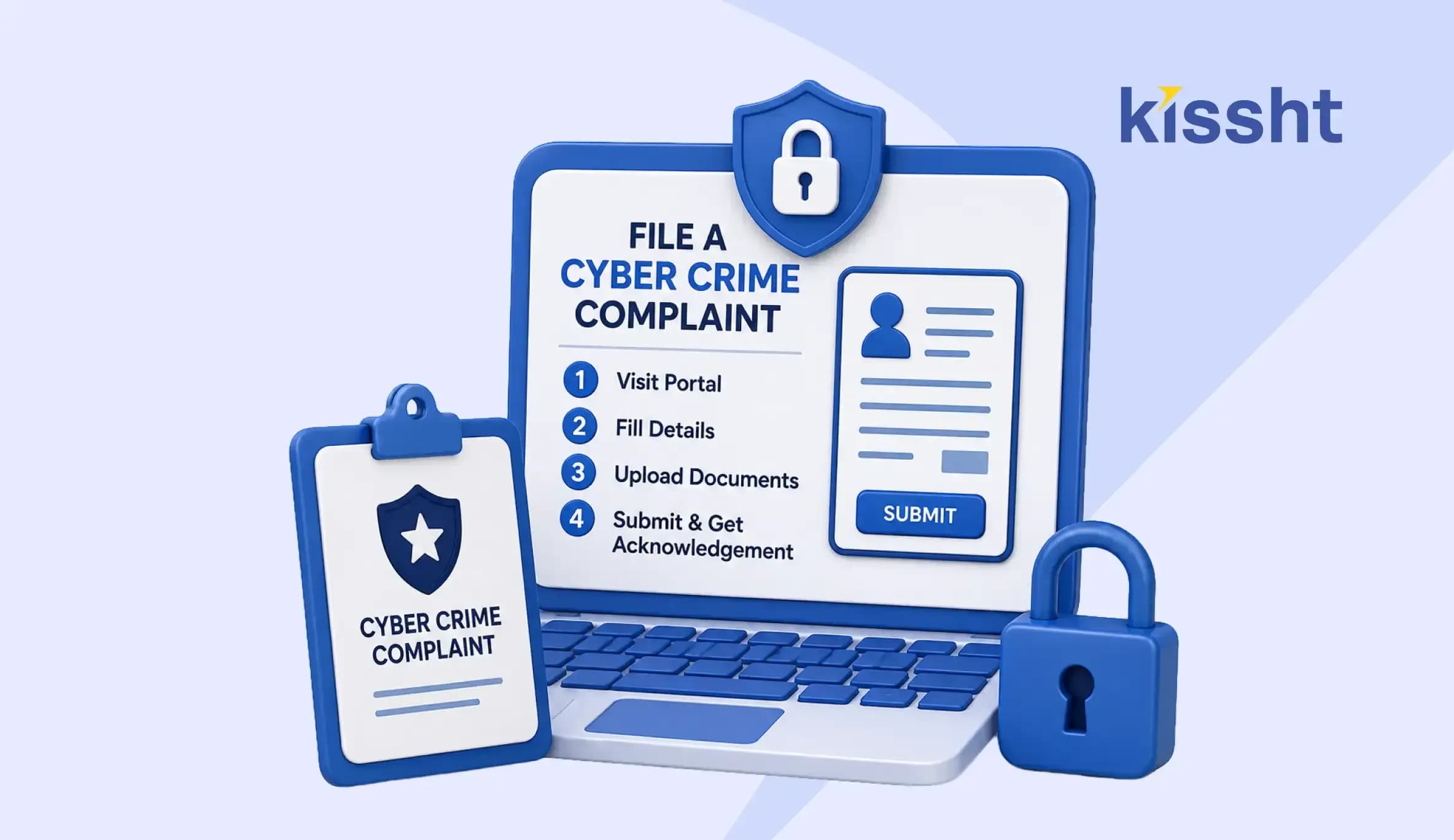
Many people assume they must visit a police station to make an online fraud complaint. However, the Government of India has simplified the reporting process. Victims can now file each and every cybercrime complaint online via the National Cyber Crime Reporting Portal.
For a financial cyber fraud complaint, victims can dial the cybercrime helpline number: 1930
How to file a cybercrime complaint in India?
The Government of India has made cybercrime reporting simple through its dedicated online portal for citizens.
Step 1: Visit the official National Cyber Crime Portal
Step 2: Go to the ‘Register a Complaint’ option
Step 3: Enter your mobile number, generated OTP, and Captcha text
Step 4: Click on ‘Login’ for the next step
Step 5: Select the relevant complaint category
Step 6: Enter complete incident details, including website, transaction, and other details
Step 7: Upload supporting evidences
Step 8: Review and submit the complaint
Step 9: Save the acknowledgement/reference number
Common types of cybercrime in India
Cyber criminals use different methods to target people based on their online behaviour.
| Type | Description |
|---|---|
| Phishing | Fake emails, SMS, or websites trick users into sharing passwords, OTPs, or banking details. |
| UPI Fraud | Fraudsters send fake payment requests or QR codes to steal money. |
| Identity Theft | Personal information such as Aadhaar number, PAN, or banking details is misused for financial fraud. |
| Social Media Hacking | Cybercriminals gain access to social media accounts and misuse them for scams or impersonation. |
| Digital Arrest Scam | Fraudsters impersonate law enforcement or government officials and threaten victims with false cybercrime charges. |
| Fake Online Loan App Scam | Scammers create duplicate versions of genuine RBI-approved loan apps to deceive users and commit financial fraud. |
Tips to protect yourself from cybercrime
Staying alert while using digital services can reduce the odds of becoming a victim of cybercrime. Here are some practical tips to follow:
- Never share your OTP, PIN, CVV, or banking passwords with anyone
- Verify website URLs before entering personal or payment details
- Download RBI-approved loan apps only from the Play Store and App Store
- Enable two-factor authentication on important accounts
- Update your passwords at regular intervals
- Avoid using the same password across multiple platforms
- Avoid clicking on suspicious links or APK files received through SMS, emails, or social media
- Check your credit card statement and bank account regularly
- Ignore calls claiming guaranteed returns, lottery winnings, or urgent KYC updates
- Install antivirus software to protect your device
- Use a trusted online loan app like Kissht to apply for loans safely and securely
Conclusion
How to file a cybercrime complaint in India? Report it immediately through the official cybercrime complaint portal or by calling the cybercrime helpline (1930) in case of financial fraud. It is also advised to save screenshots, transaction details, emails, messages, and any other relevant evidence until the investigation is complete. Reporting the incident as soon as possible can help reduce financial losses and assist investigators.
FAQs
1. How to report cybercrime online in India?
You can report cybercrime in India using the National Cyber Crime Reporting Portal, calling the cybercrime helpline number: 1930 for financial fraud, or dialling emergency services at 112.
2. Can I get my money back after online fraud?
Yes, you can get your money back after online fraud. However, success depends on how fast you report this fraud, your payment method, and whether the funds can be frozen in time.
3. How long does it take to file a cybercrime complaint online?
Filing a cybercrime complaint online takes about 15 to 30 minutes to complete the form on the National Cyber Crime Reporting Portal.
4. Is there any fee for filing a cybercrime complaint in India?
No. Filing a complaint through the official cybercrime portal is completely free.
5. Can a cybercrime complaint be tracked?
Yes, a cybercrime complaint can be tracked online using your unique acknowledgment/reference number received at the time of filing the complaint.






Instant Loans at Your Fingertips


Personal Loan
Fast, hassle-free loan for your personal needs.

Business Loan
Fuel your business growth with quick approvals.

Loan Against Property
Unlock your property’s value with ease.

Credit Pulse
Boost your credit score with smart insights.

Track your credit score
Simply enter your mobile number to get a quick overview of your credit score.
Check Now

Related articles

Sept 23, 2026
What are the Common UPI Terms and Their Meanings?

Sept 15, 2026
UPI MDR Explained: What Changes From October 2026?

Aug 28, 2026
Mutual Funds vs․ Stocks: What's the Difference?

Aug 28, 2026
Best Investment Options for Beginners

Aug 23, 2026
SIP Investment Guide for Beginners: Steps, Benefits and Risks
Aug 11, 2026
Different Types of Bank Accounts in India: Which One Should You Choose?
Aug 25, 2026
Form 26AS: Meaning, Details, Login & How to Download

Aug 25, 2026
50/30/20 Budget Rule: Your Simple Guide to Financial Management

Jul 28, 2026
8 Best Walking Pads for Home in India (2026): Top Foldable Picks for Everyday Fitness

Jul 27, 2026
How to Download Form 15G Online: Form 121 PDF, Eligibility and Submission Guide - 2026

Jun 18, 2026

