How Much Personal Loan Can I Get Based on My Salary? Complete Eligibility Guide (2026)
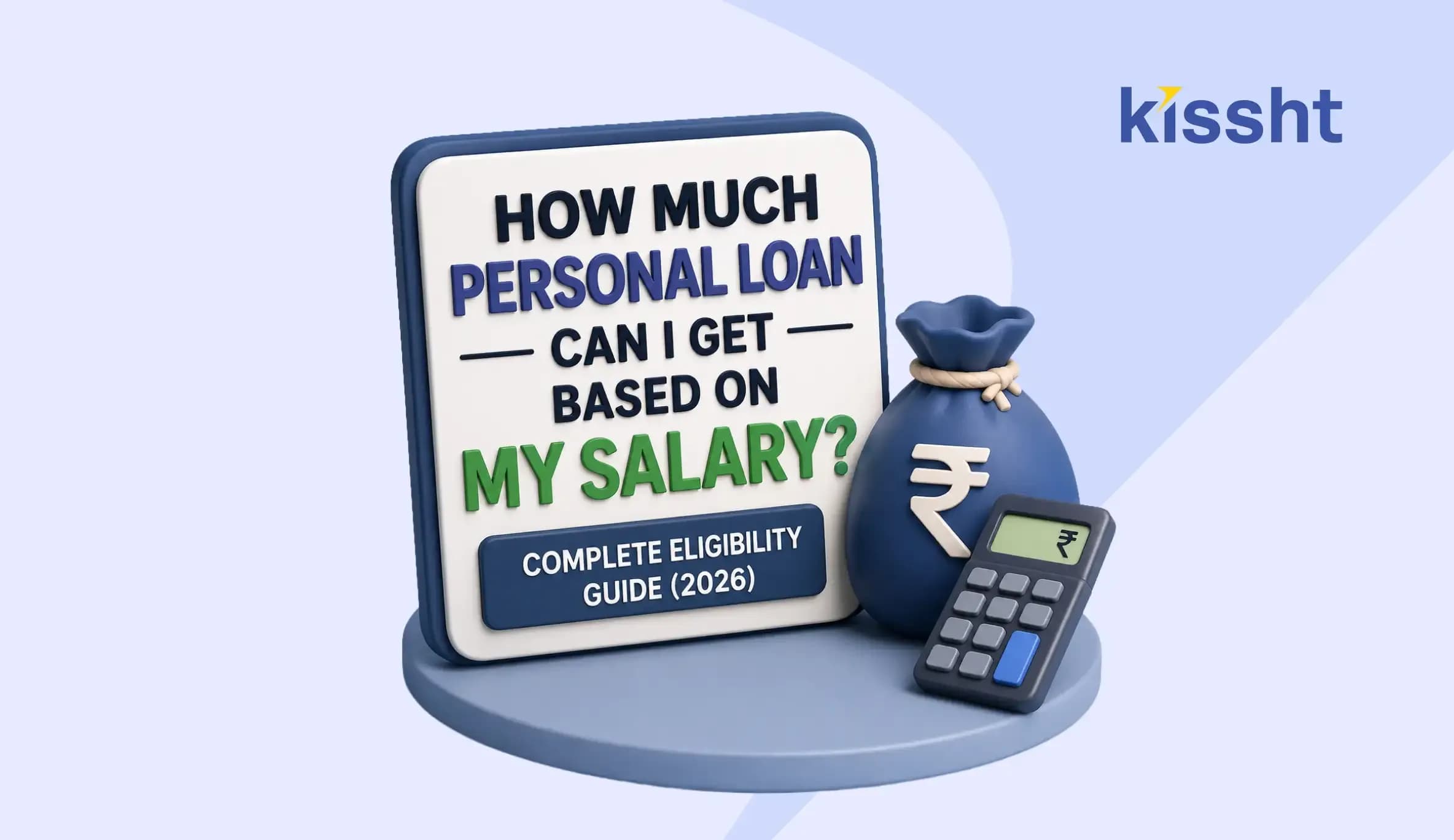
Planning to apply for a personal loan but unsure how much you can borrow? That's one of the first questions most borrowers ask before applying. Whether you need funds for a wedding, medical emergency, home renovation, higher education, travel, or debt consolidation, understanding your loan eligibility helps you make informed financial decisions.
While your monthly salary plays a major role in determining how much you can borrow, lenders don't approve loans based on income alone. They also consider your credit score, existing EMIs, employment stability, employer profile, and overall repayment capacity. This means two individuals earning the same salary may receive different loan offers depending on their financial profiles.
In this guide, we'll explain how lenders calculate loan eligibility, how much personal loan you may qualify for based on your salary, and what you can do to improve your chances of getting approved in 2026.
How Much Personal Loan Can You Get Based on Your Salary?
There isn't a fixed loan amount for everyone. Most banks and NBFCs determine your eligibility by evaluating your monthly income along with your financial obligations and repayment capacity.
In general, lenders may offer a personal loan ranging from 10 to 30 times your monthly net salary. However, the final amount depends on factors such as your credit history, existing loans, employment profile, and the lender's policies.
| Monthly Salary | Estimated Loan Eligibility |
|---|---|
| ₹20,000 | ₹2 lakh – ₹4 lakh |
| ₹30,000 | ₹3 lakh – ₹6 lakh |
| ₹40,000 | ₹4 lakh – ₹8 lakh |
| ₹50,000 | ₹5 lakh – ₹12 lakh |
| ₹75,000 | ₹8 lakh – ₹18 lakh |
| ₹1,00,000+ | ₹10 lakh – ₹30 lakh+ |
Note: The figures above are indicative. The final approved loan amount may vary depending on your overall financial profile and the lender's specific criteria.
Why Does Your Salary Matter?
Your monthly salary is one of the most important factors lenders evaluate because it reflects your repayment capacity. Since personal loans are unsecured, lenders rely on your income to determine whether you can comfortably repay the borrowed amount through monthly EMIs.
However, lenders don't only look at your gross salary. They also evaluate your net take-home income, the amount credited to your bank account after deductions like taxes and provident fund contributions. This gives them a better understanding of your actual repayment capacity.
For example, if two applicants earn ₹50,000 per month, the one with fewer financial obligations and a stronger credit history is likely to qualify for a higher loan amount. Maintaining a stable income and healthy financial habits can improve both your eligibility and the terms offered by the lender.
Factors That Affect Personal Loan Eligibility
Monthly Income
A higher monthly income generally improves your borrowing capacity because it indicates stronger repayment ability. Lenders prefer applicants whose salaries are credited regularly, as this shows financial stability.
Credit Score
Your credit score reflects your borrowing history and repayment behaviour. A score of 750 or above is generally considered favourable and may improve your chances of loan approval while helping you secure better interest rates.
Late EMI payments, loan defaults, and excessive credit card utilisation can negatively affect your credit score and reduce your eligibility.
Existing EMIs
If you have multiple monthly loan repayments, lenders may approve a lower loan amount because a large portion of your income is already committed to existing financial obligations.
Reducing outstanding debt before applying can improve your borrowing capacity.
Employment Stability
Applicants with stable employment are generally considered lower-risk borrowers. Working with the same employer for six months or more demonstrates consistent income and improves lender confidence.
Employer Profile
Many lenders also consider your employer's reputation. Employees of government organisations, multinational companies, or established private firms may receive more favourable loan offers due to perceived job security.
What Is FOIR?
Lenders often calculate the Fixed Obligation to Income Ratio (FOIR) before approving a personal loan.
FOIR measures how much of your monthly income is already being used to repay existing EMIs and other fixed financial obligations.
For example, if your monthly salary is ₹60,000 and your current EMIs total ₹15,000, lenders will assess whether your remaining income is sufficient to comfortably manage another EMI.
A lower FOIR generally indicates better repayment capacity and can improve your chances of receiving a higher loan amount.
Documents Required
Most lenders require standard documents to verify your identity, income, and employment.
These typically include:
- Aadhaar Card
- PAN Card
- Salary slips (last three months)
- Bank statements (last three to six months)
- Employee ID
- Address proof
- Passport-size photograph (if applicable)
Having these documents ready can speed up the approval process.
How to Increase Your Personal Loan Eligibility
To qualify for a higher loan amount, consider these practical steps: maintain a credit score above 750.
- Pay all EMIs and credit card bills on time.
- Reduce existing loan balances before applying.
- Avoid multiple loan applications within a short period.
- Maintain stable employment.
- Choose an affordable repayment tenure.
- Ensure all documents are accurate and up to date.
Small improvements to your financial profile can significantly increase your chances of approval. Apply for a Personal Loan with Kissht.
If you're looking for a simple and convenient borrowing experience, explore a personal Loan with Kissht. Eligible borrowers can check loan eligibility online, complete the application digitally with minimal paperwork, and receive quick loan decisions, subject to lender approval and terms.
Conclusion
Knowing how much personal loan you can get based on your salary helps you plan your finances effectively and apply with realistic expectations. While your monthly income is important, lenders also assess your credit score, existing EMIs, employment stability, and repayment capacity before making a decision.
Before applying, evaluate your financial situation, borrow only what you need, and ensure your monthly EMI fits comfortably within your budget. If you want a trusted loan app, explore a Personal Loan through Kissht to check eligibility online and complete the application quickly, subject to lender approval.
FAQs
How much personal loan can I get on a ₹30,000 salary?
Depending on your credit score, employer profile, and existing financial obligations, you may qualify for approximately ₹3 lakh to ₹6 lakh.
Does salary alone determine personal loan eligibility?
No. Lenders also evaluate your credit score, repayment history, employment stability, existing EMIs, and overall financial profile before approving a loan.
Can I get a personal loan with a low credit score?
Yes, some lenders may approve applications with lower credit scores, although the approved amount may be lower and the interest rate may be higher.
Does a longer repayment tenure improve eligibility?
A longer tenure usually reduces your monthly EMI, which may increase your borrowing capacity. However, it also increases the total interest paid over the loan period.
Can I check my loan eligibility online?
Yes. Most banks, NBFCs, and digital loan platforms allow you to check your personal loan eligibility online before submitting a formal application.




Instant Loans at Your Fingertips
Apply nowPersonal Loan
Fast, hassle-free loan for your personal needs.

Business Loan
Fuel your business growth with quick approvals.

Loan Against Property
Unlock your property’s value with ease.

Credit Pulse
Boost your credit score with smart insights.

Track your credit score
Simply enter your mobile number to get a quick overview of your credit score.
Check Now
Related articles

Aug 20, 2026
Chakshu Portal: What to Do When You Receive a Fraudulent Communication?

Jul 15, 2026
How Much Loan Can You Get for a Food Franchise Business?
Aug 10, 2026
Independence Day Special: 10 Smart Money Habits to Build Financial Freedom
Jul 23, 2026
What Is the Difference? MSME Loan vs Business Loan
Jul 22, 2026
EPF New Rules 2026 Explained: Withdrawal, Contribution, Wage Ceiling & Key Changes
Jul 20, 2026
How to Check EPFO Pension Status Online Using PPO Number (2026)
Jul 21, 2026
Top Reasons for MSME Loan Rejection
Jul 20, 2026
Documents Required for GST Registration
Jul 16, 2026
How to Check FASTag Balance Online: Vehicle Number, App, SMS & Missed Call (2026)
Jul 10, 2026
List of Best Mileage Bikes in India (2026)
Jul 13, 2026
Personal Loan vs MSME Loan: Which is Better for Business Needs?
Jun 28, 2026

