Why Understanding Different Types of Bank Accounts Matters
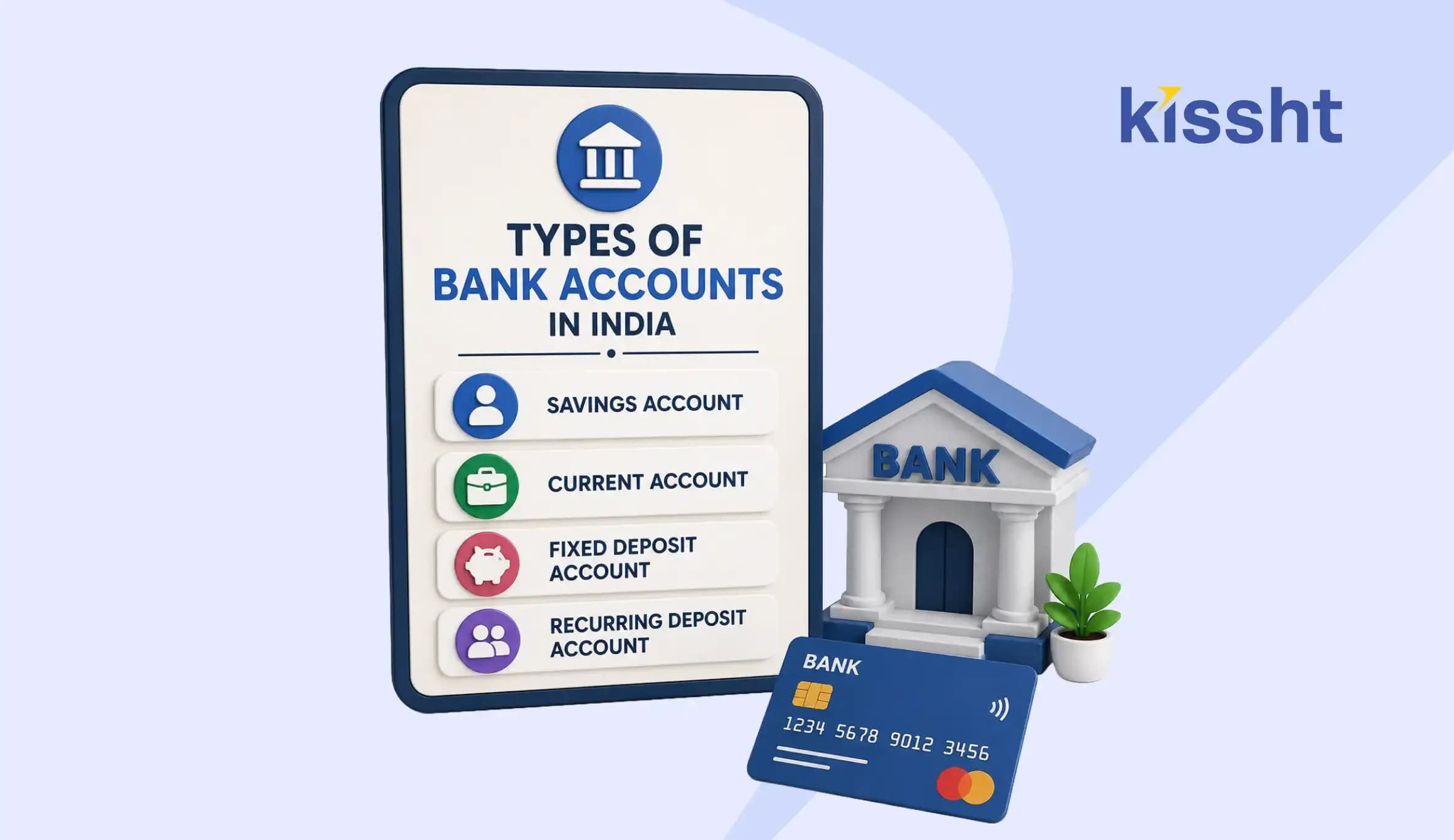
A bank account is not just a place to keep money. It also supports salary credits, bill payments, UPI transactions, investments, tax records, and loan applications. For example, if you apply for a personal loan, lenders may review your bank statements to understand your income, cash flow, and repayment capacity.
The right account can help you:
- Track income and expenses
- Keep savings separate from daily spending.
- Manage business transactions clearly.
- Earn interest on idle money.
- Build a clean financial record.
- Make digital payments safely.
5 Different Types of Bank Accounts in India
Here are the 5 different types of bank accounts commonly used in India.
| Type of Bank Account | Best For | Key Benefit |
|---|---|---|
| Savings Account | Individuals and families | Earns interest and supports daily banking |
| Current Account | Businesses and professionals | Handles frequent transactions |
| Salary Account | Salaried employees | Zero-balance benefits in many cases |
| Fixed Deposit Account | People with surplus funds | Offers fixed returns for a chosen tenure |
| Recurring Deposit Account | Regular savers | Helps build savings through monthly deposits |
1. Savings Account
A savings account is one of the most common kinds of bank accounts in India. It is mainly used by individuals to save money, receive a salary or income, make payments, withdraw cash, and earn interest.
Common Types of Savings Account
The types of savings accounts may vary by bank, but commonly include:
- Regular savings account
- Zero-balance savings account
- Salary savings account
- Senior citizen savings account
- Women’s savings account
- Minor savings account
- Premium savings account
Best for
A savings account is suitable for students, homemakers, salaried employees, freelancers, and anyone who wants a safe place to keep money for daily use.
2. Current Account
A current account is designed for businesses, traders, companies, shop owners, startups, and professionals who handle frequent transactions. Unlike a savings account, it is not primarily meant to earn interest. Its purpose is smooth business banking.
Common Types of Current Account
The types of current accounts may include:
- Regular current account
- Premium current account
- Startup current account
- Merchant current account
- Foreign currency current account
- Overdraft current account
Best for
A current account is useful if you regularly receive business payments, pay vendors, issue cheques, collect customer payments, or manage GST-related transactions.
3. Salary Account
A salary account is usually opened by an employer for employees. In many cases, it comes with zero-balance benefits, debit card offers, digital banking access, and easy salary credit.
If the salary is not credited for an extended period, some banks may convert it to a regular savings account. So, it is important to check the bank’s terms.
Best for
This account is ideal for salaried professionals who want a simple account for monthly income, bill payments, savings, and investments.
4. Fixed Deposit Account
A fixed deposit account is used when you want to park a lump sum amount for a fixed period. The bank pays a fixed interest rate, and the money is generally locked until maturity.
Fixed deposits are popular because they offer predictable returns and are considered relatively safe compared with market-linked investments.
Best for
Fixed deposits are useful for people with surplus funds who do not need immediate access to their money.
5. Recurring Deposit Account
A recurring deposit account helps you save a fixed amount every month for a chosen tenure. It is useful when you want to build disciplined savings without investing a large amount at once.
For example, if you save ₹2,000 every month in an RD, you can gradually build a fund for future expenses like travel, education, gadgets, or emergencies.
Best for
Recurring deposits are suitable for beginners, salaried individuals, students, and anyone who wants to build a savings habit.
How Bank Accounts Help During Loan Applications
Your bank account history can play an important role when you apply for credit. Lenders may look at your salary credits, spending patterns, EMI history, bounced payments, and average balance.
If you are applying for an instant personal loan, having clean bank statements and regular income credits may support the verification process. Digital lending platforms like Kissht may also use bank account details as part of the application and KYC process, subject to eligibility and lender policy.
An instant loan app can make borrowing convenient, but responsible money management starts with maintaining a healthy bank account record. Avoid frequent bounced payments, unnecessary overdrafts, and irregular repayments.
How to Choose the Right Bank Account
Before opening an account, carefully compare your needs.
Ask yourself:
- Do I need the account for savings or business?
- Is zero-balance banking important for me?
- What are the minimum balance rules?
- Are ATM, debit card, or SMS charges applicable?
- Does the account support UPI and mobile banking?
- How easy is customer support?
- Are there limits on withdrawals or transactions?
If you manage both personal and business money, keep separate accounts. This makes budgeting, taxation, and financial planning much easier.
Quick Tips to Manage Your Bank Account Better
- Keep your KYC details updated.
- Maintain the required minimum balance.
- Check bank charges regularly.
- Review account statements every month.
- Avoid sharing OTPs, PINs, or passwords.
- Use UPI and net banking only on secure devices.
- Keep emergency savings in a separate account.
- Track automatic payments and subscriptions.
Conclusion
Understanding the types of bank accounts in India helps you choose the right account for your money goals. A savings account is useful for daily banking, a current account supports business transactions, a salary account simplifies income management, and FD or RD accounts help you save with discipline.
The best account depends on your lifestyle, income source, transaction needs, and financial goals. Once you know the different types of bank accounts, you can manage money more confidently, build better financial habits, and keep your records ready for future needs such as investments, tax filing, or loan applications.
FAQs
1. What are the main types of bank accounts in India?
The main types include savings accounts, current accounts, salary accounts, fixed deposit accounts, and recurring deposit accounts.
2. Which bank account is best for daily use?
A savings account is best for daily use because it supports deposits, withdrawals, UPI payments, debit card payments, and interest accrual.
3. What is the difference between a savings account and a current account?
A savings account is mainly for individuals who want to save and manage daily money. A current account is meant for businesses and professionals with frequent transactions.
4. Can bank account history affect personal loan approval?
Yes. Lenders may check bank statements to understand income, spending habits, existing EMIs, and repayment capacity before approving a loan.
5. Is a salary account different from a savings account?
Yes. A salary account is opened for salary credits and often comes with zero-balance benefits. If the salary is not credited for some time, it may be converted into a regular savings account.



Instant Loans at Your Fingertips
Apply nowPersonal Loan
Fast, hassle-free loan for your personal needs.

Business Loan
Fuel your business growth with quick approvals.

Loan Against Property
Unlock your property’s value with ease.

Credit Pulse
Boost your credit score with smart insights.

Track your credit score
Simply enter your mobile number to get a quick overview of your credit score.
Check Now
Related articles
Jun 28, 2026
How to Change Address in Passport: Complete Guide for India 2026
Jun 29, 2026
How Much Personal Loan Can I Get Based on My Salary? Complete Eligibility Guide (2026)
Jun 15, 2026
AO Codes for PAN Card: Meaning, Importance, and How to Find the Right One

Jun 20, 2026
Top 10 Affordable Portable Speakers You Can Buy in 2026
Jun 20, 2026
Top Government Schemes for Starting a Business in India 2026: A Complete Guide

Jun 20, 2026
Best 5-Star Hotels in New Delhi: Top Luxury Stays Across Delhi
Jun 27, 2026
E-Challan Status Check Online: Complete Guide
Jun 20, 2026
AI ML Engineer Salary in India: Monthly Income, Skills and Career Scope
Jun 25, 2026
Best Raksha Bandhan Gift Ideas for Sister
Jun 25, 2026
Manage Your Monthly Budget with Ease Using Smart Household Finance Apps
Jun 20, 2026
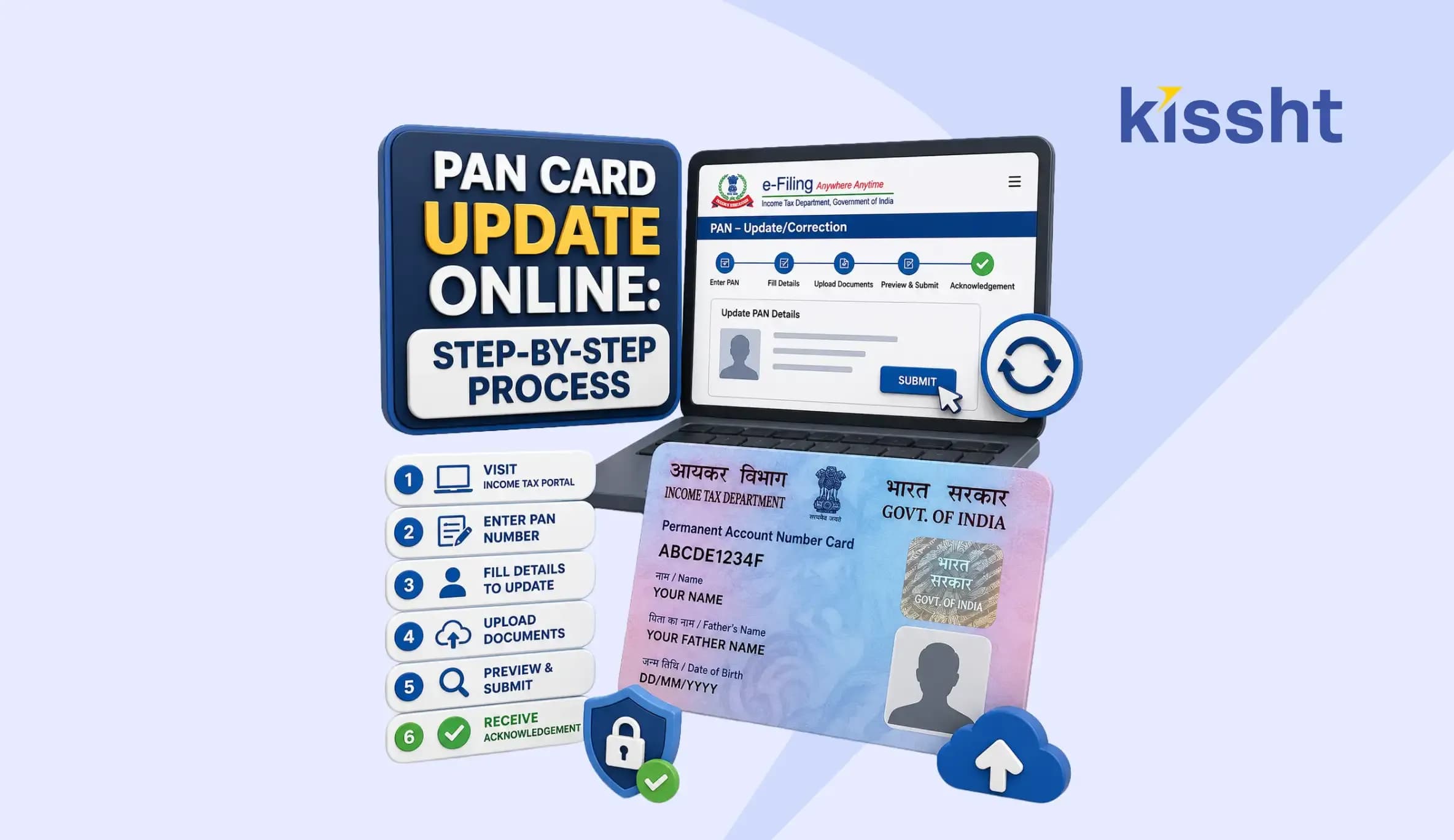
PAN Card Update Online: Step-by-Step Process
Jun 20, 2026