Ways to Get Funding for Your Startup Idea

Every successful business begins with an idea, but turning that idea into a sustainable venture often requires financial backing. Whether you are building a technology platform, launching an e-commerce store, opening a service-based business, or developing a new product, access to capital can help you move from planning to execution. Fortunately, entrepreneurs today have access to a wider range of funding opportunities than ever before.
Many founders explore startup business loans, compare financing options through an online loan app, or apply for an instant business loan to secure the resources needed to launch and grow their ventures. Digital platforms have simplified access to funding, making it easier for entrepreneurs to evaluate different solutions and choose one that aligns with their business goals.
When considering startup business loans, founders should understand how different funding models work and which option best suits their stage of growth. An online loan app can help compare lenders and eligibility criteria, while an instant business loan may provide quick access to capital when time-sensitive opportunities arise.
Why Funding Matters for Startups
Building a business often involves expenses before revenue starts flowing consistently. Entrepreneurs may need capital for:
- Product development
- Equipment purchases
- Marketing and advertising
- Hiring employees
- Technology infrastructure
- Inventory management
- Working capital
The right funding strategy can help a business scale more efficiently while maintaining financial stability.
1. Self-funding or bootstrapping
One of the most common startup funding options is self-funding, also known as bootstrapping. In this approach, founders use their personal savings or income to finance the business.
Benefits include:
- Full ownership and control
- No repayment obligations
- Greater flexibility in decision-making
Many successful companies started with modest personal investments before attracting external capital.
2. Friends and family support
Friends and family often become the first supporters of a new business idea. They may provide funding as a loan, investment, or informal partnership.
When accepting financial assistance from personal connections:
- Clearly document expectations
- Define repayment timelines if applicable
- Maintain transparency regarding business risks
This can be an effective source of funding for new business ventures during the early stages.
3. Angel investors
Angel investors are individuals who invest their own money in promising startups in exchange for equity.
They often provide:
- Capital
- Industry expertise
- Business mentorship
- Professional networks
For entrepreneurs researching how to get funding for a startup idea, angel investors can offer both financial and strategic value.
4. Venture capital funding
Venture capital firms invest in businesses with significant growth potential.
This route may be suitable for startups that:
- Operate in high-growth sectors
- Have scalable business models
- Demonstrate strong market demand
Although venture capital can provide substantial resources, founders should carefully consider ownership dilution and long-term expectations.
5. Crowdfunding platforms
Crowdfunding allows entrepreneurs to raise small amounts of money from a large number of contributors.
Common crowdfunding models include:
- Reward-based campaigns
- Equity crowdfunding
- Donation-based fundraising
This approach can help validate market demand while generating early customer interest.
6. Business loans
Traditional and digital lenders continue to play an important role in startup financing. Many entrepreneurs consider business loans for new businesses when they need structured financing without giving up ownership.
Advantages may include:
- Predictable repayment schedules
- Retention of business ownership
- Access to working capital
Today, many lenders offer loans for new businesses through streamlined digital application processes, making financing more accessible to aspiring entrepreneurs.
7. Government schemes and startup programmes
Governments and development institutions often introduce programmes aimed at encouraging entrepreneurship.
These initiatives may offer:
- Grants
- Subsidised financing
- Mentorship opportunities
- Incubation support
Exploring available startup funding options can help founders identify opportunities that align with their sector and growth plans.
8. Strategic partnerships
Partnering with established organisations can sometimes provide access to funding, resources, or market opportunities.
A strategic partner may contribute:
- Capital investment
- Distribution support
- Technology expertise
- Operational guidance
This can be especially valuable for startups entering competitive industries.
9. Revenue-based growth
Not all businesses need external investors. Some founders choose to grow gradually by reinvesting business earnings.
This approach allows entrepreneurs to:
- Maintain ownership
- Reduce external obligations
- Build sustainable growth over time
It is often considered one of the most practical funding sources for new businesses that generate revenue early in their journey.
Choosing the right funding option
The best funding strategy depends on your business model, growth objectives, and financial requirements.
When evaluating funding for new business opportunities, consider:
Your capital requirement
Determine how much funding is needed and how the money will be used.
Repayment capacity
If considering loans for start up businesses, ensure future cash flows can comfortably support repayments.
Ownership preferences
Some founders prefer retaining complete control, while others are comfortable exchanging equity for capital.
Speed of access
An entrepreneur seeking how to raise money for a startup may prioritise speed, flexibility, or long-term strategic support depending on business circumstances.
It is also important to compare multiple lenders before selecting a loan provider. Different institutions may offer varying terms, repayment structures, and eligibility requirements. Entrepreneurs evaluating business loans for new businesses should take time to review all available options carefully.
For many founders, loans for start up businesses provide an accessible path to securing capital while maintaining ownership. As the startup ecosystem continues to expand, funding sources for new businesses have become increasingly diverse, creating more opportunities for entrepreneurs to pursue their ambitions.
Similarly, loans for new businesses can help bridge financial gaps during critical growth phases, while loans for start up businesses may support investments in equipment, inventory, technology, or expansion initiatives. Comparing different offers from a trusted loan provider can help entrepreneurs make informed financing decisions.
FAQs
How to get funding for a startup idea?
Entrepreneurs can explore self-funding, angel investors, venture capital, crowdfunding, government programmes, and startup business loans depending on their business needs and growth plans.
What are some common startup funding options?
Common options include personal savings, family funding, angel investments, venture capital, business loans, government initiatives, and crowdfunding platforms.
Are loans for new businesses available without a long operating history?
Eligibility requirements vary by lender, but many financial institutions and digital platforms offer financing solutions specifically designed for early-stage businesses.
Same-Day Loans Explained: Meaning, Process, and Benefits
 Previous
750 Credit Score: Is It Good or Bad?


Kissht Research TeamTeam Kissht - Authors
Thank You for reading the Kissht blog. Behind every article is the Kissht Content & Research Team, working to make sure you always find clear, reliable answers to your personal finance questions.Thank you for reading the Kissht blog. Behind every article is the Kissht Content & Research Team, working to make sure you always find clear, reliable answers to your personal finance questions.

Instant Loans at Your Fingertips
Apply nowPersonal Loan
Fast, hassle-free loan for your personal needs.

Business Loan
Fuel your business growth with quick approvals.

Loan Against Property
Unlock your property’s value with ease.

Credit Pulse
Boost your credit score with smart insights.

Track your credit score
Simply enter your mobile number to get a quick overview of your credit score.
Check Now
Related articles

Aug 20, 2026
Chakshu Portal: What to Do When You Receive a Fraudulent Communication?
Jul 15, 2026
How Much Loan Can You Get for a Food Franchise Business?
Aug 10, 2026
Independence Day Special: 10 Smart Money Habits to Build Financial Freedom
Jul 23, 2026
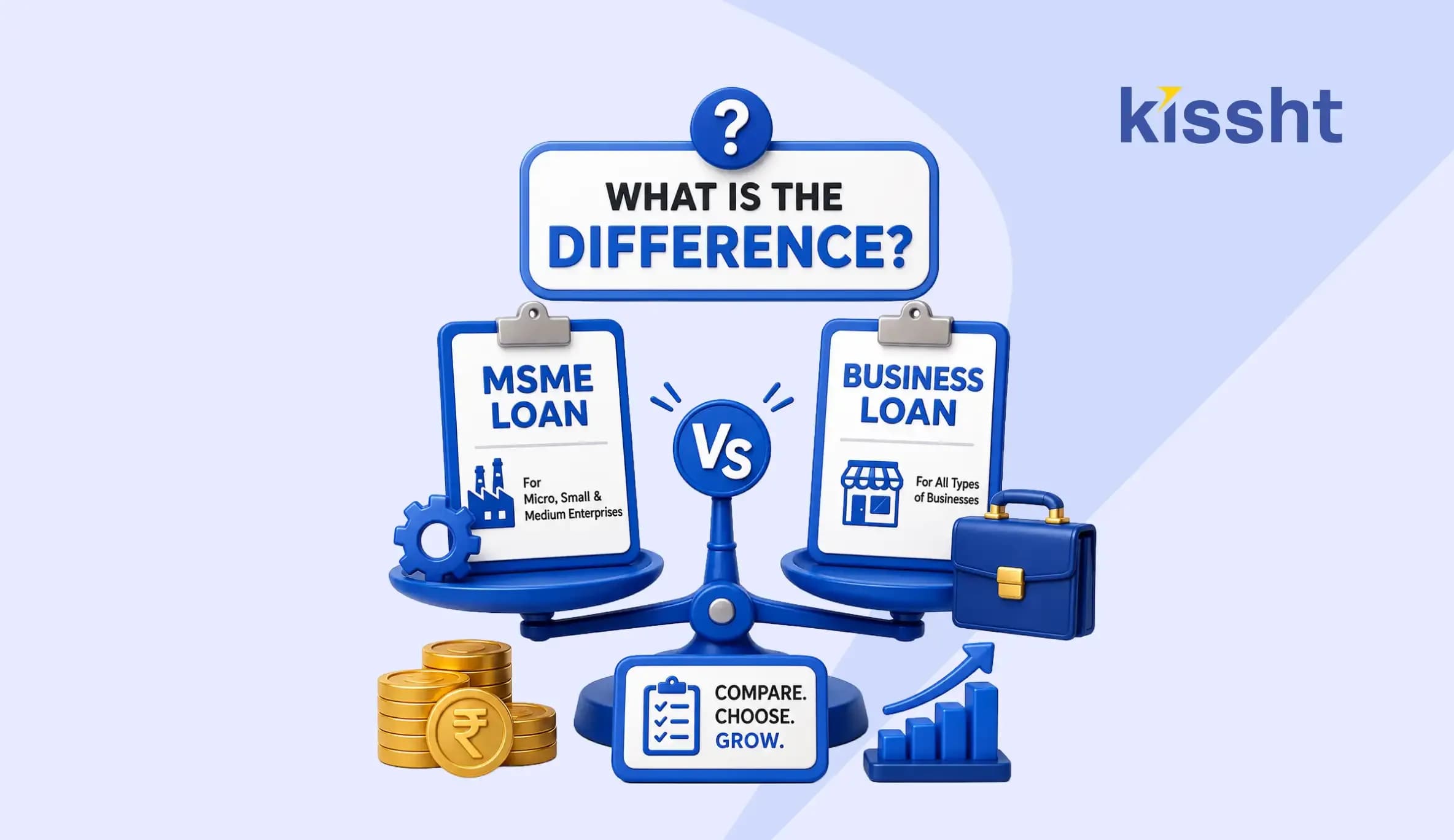
What Is the Difference? MSME Loan vs Business Loan

Jul 20, 2026
How to Check EPFO Pension Status Online Using PPO Number (2026)
Jul 21, 2026
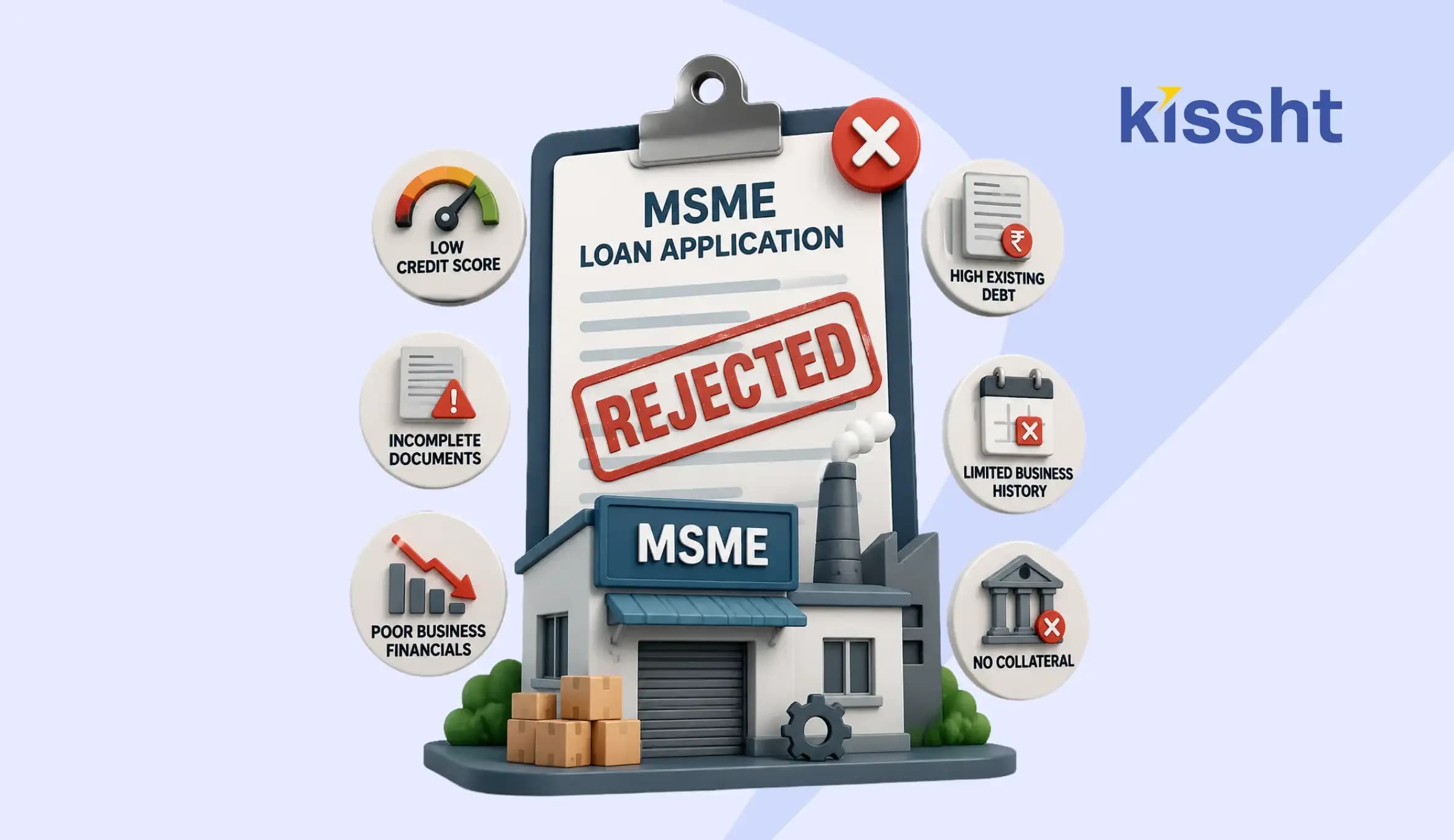
Top Reasons for MSME Loan Rejection
Jul 20, 2026
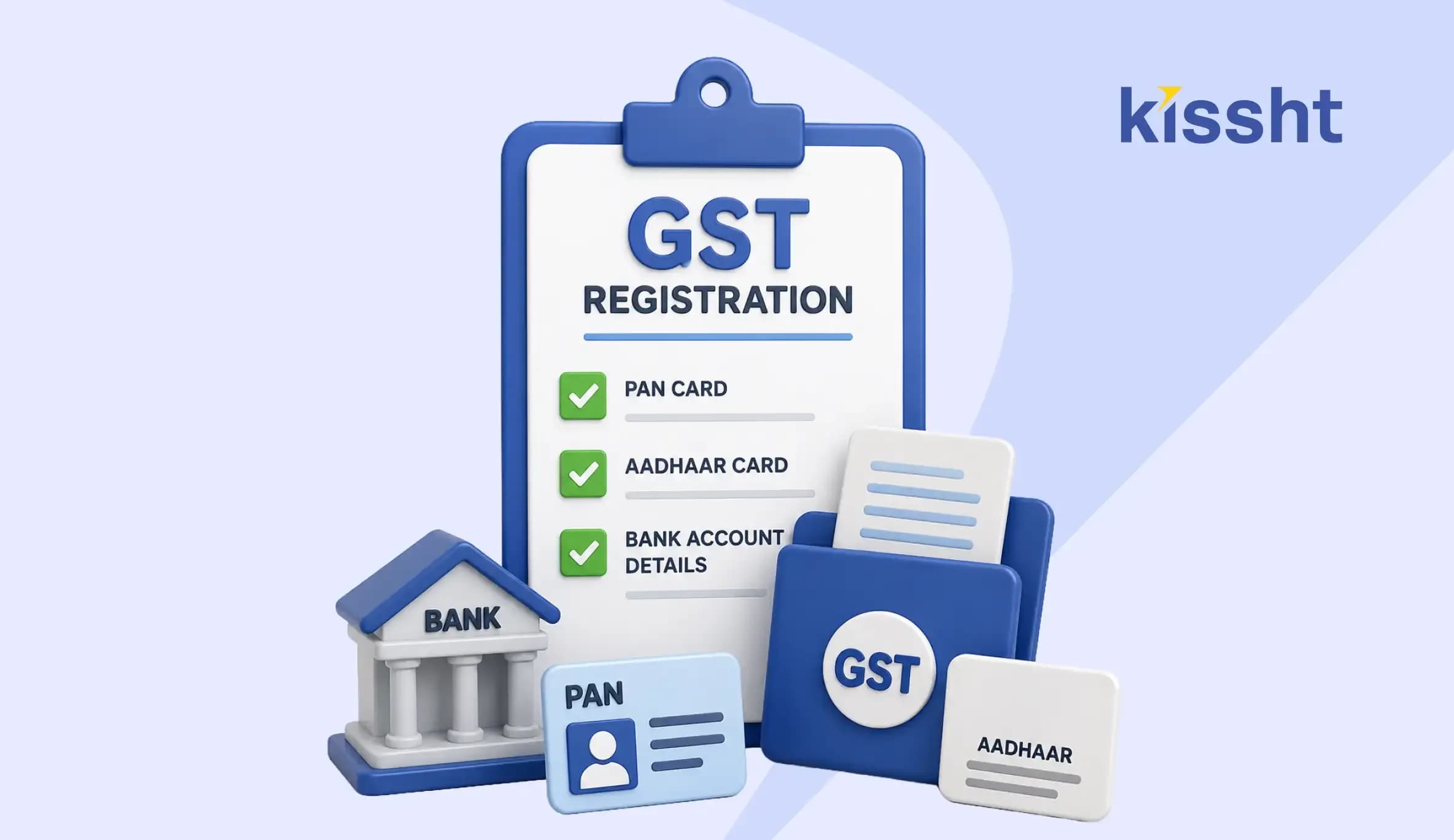
Documents Required for GST Registration
Jul 13, 2026
Personal Loan vs MSME Loan: Which is Better for Business Needs?

Jun 29, 2026
How Much Personal Loan Can I Get Based on My Salary? Complete Eligibility Guide (2026)

Jun 20, 2026
Top Government Schemes for Starting a Business in India 2026: A Complete Guide
Jun 25, 2026
Manage Your Monthly Budget with Ease Using Smart Household Finance Apps

Jun 20, 2026

