Transaction Limit
Definition:
A transaction limit is the maximum amount of money or number of transactions that a bank or payment service allows a customer to make within a specified period.
What is a Transaction Limit?
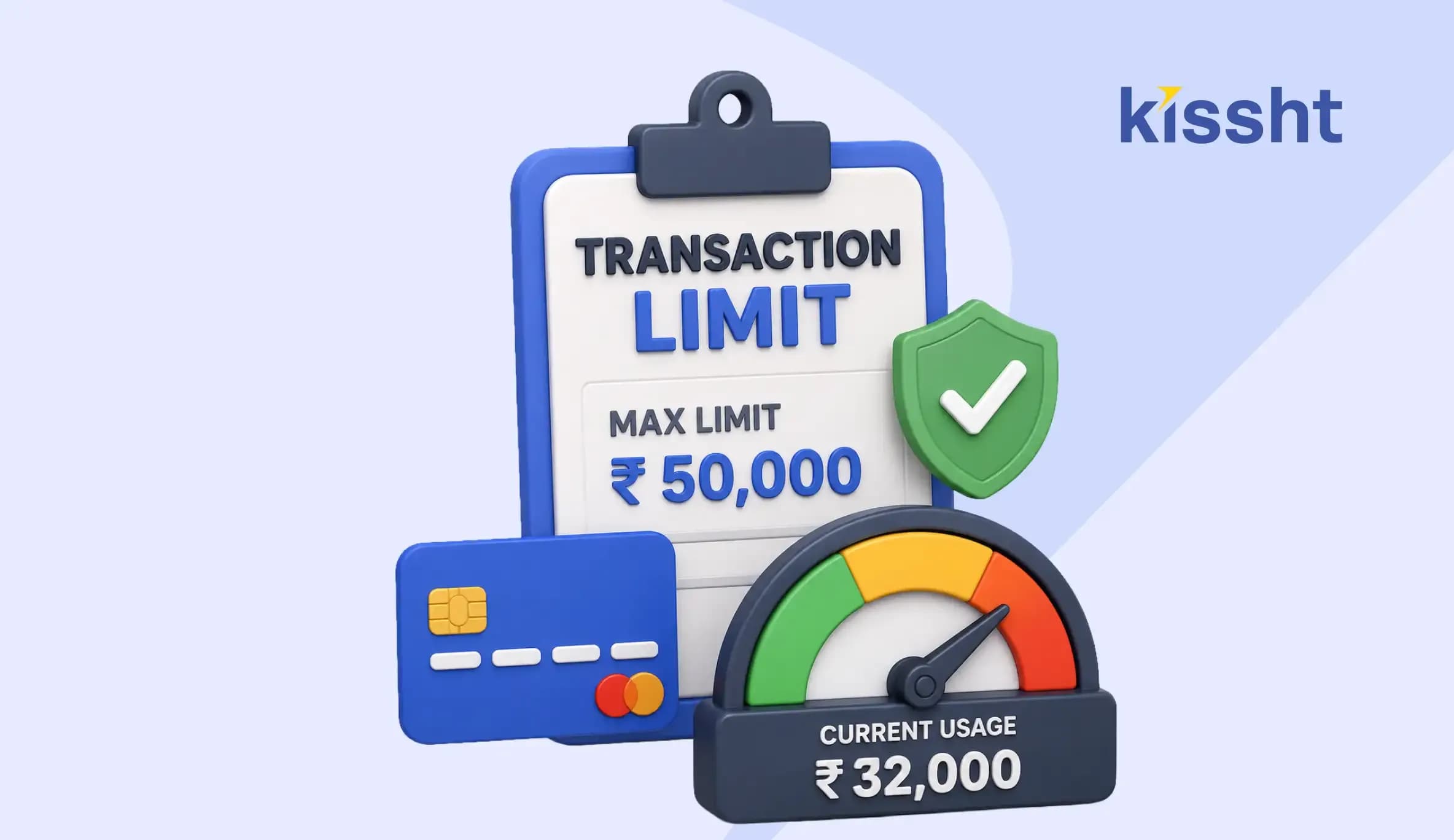
A transaction limit is a financial control set by banks, payment service providers, payment networks, or regulators that restricts the maximum value or number of transactions an account holder can perform. These limits may apply to individual transactions, daily transfers, weekly or monthly cumulative transactions, or specific payment channels such as UPI, IMPS, NEFT, RTGS, debit cards, and credit cards.
The main purpose of setting transaction limits is to reduce the risk of unauthorised transactions, fraud, cybercrime, and money laundering while ensuring the smooth functioning of payment systems. One more benefit is that banks can manage operational risks and comply with RBI guidelines.
Factors that Affect Transaction Limits
- Payment Methods (UPI, IMPS, NEFT, RTGS, Cards, etc)
- Bank’s Internal Policies
- Customer’s Account Types
- Know Your Customer (KYC) Verification Status
- Merchant Category
- Regulatory Requirements
For example, while the RBI sets the framework for digital payments, individual banks may set lower limits for internet or mobile banking based on their risk assessments.
Why Do Banks/Payment Services Set Transaction Limits?
- Prevent Fraud & Unauthorised Transactions
- Enhance Customer Security
- Comply with RBI Guidelines
- Manage Operational & Financial Risks
- Detect Suspicious Activities
- Protect Digital Payment Infrastructure
- Support Responsible Banking
Transaction Limit vs Withdrawal Limit
| Basis | Transaction Limit | Withdrawal Limit |
|---|---|---|
| Primary Purpose | Caps digital payments | Caps physical cash dispensed at an ATM or over the counter at a bank |
| Scope | Applies to both digital payments to merchants and peer-to-peer transfers | Applies only to withdrawing physical cash |
| Example | If your UPI transaction limit is ₹1 lakh per day, you cannot transfer more than ₹1 lakh through UPI in a single day. | If your ATM withdrawal limit is ₹40,000 per day, you cannot withdraw more than ₹40,000 in cash from ATMs that day. |
FAQs
A transaction limit is the maximum amount of money or number of transactions that a bank or payment service allows a customer to make within a specified period of time.
Why do banks have transaction limits?
Banks impose transaction limits to reduce fraud, protect customer accounts, manage financial risk, and comply with regulatory guidelines.
Can I increase my transaction limit?
Yes, you can increase your transaction limit. The process depends entirely on the type of payment method and your specific bank.
What happens if I exceed my transaction limit?
If you exceed your transaction limit, the transaction is usually declined. You can retry after the limit resets or request a higher limit from your bank.
How to check the UPI limit?
To check your UPI limit, open your UPI app, tap your Profile, select your Bank Account, and look for Limits or Bank Details.
Related Terms

Instant Loans at Your Fingertips
Apply nowPersonal Loan
Fast, hassle-free loan for your personal needs.

Business Loan
Fuel your business growth with quick approvals.

Loan Against Property
Unlock your property’s value with ease.

Credit Pulse
Boost your credit score with smart insights.

Track your credit score
Simply enter your mobile number to get a quick overview of your credit score.
Check Now