Loan Repayment
Definition
Loan repayment is the process of repaying the borrowed loan amount to the lender, along with applicable interest and charges, according to the terms of the loan agreement.
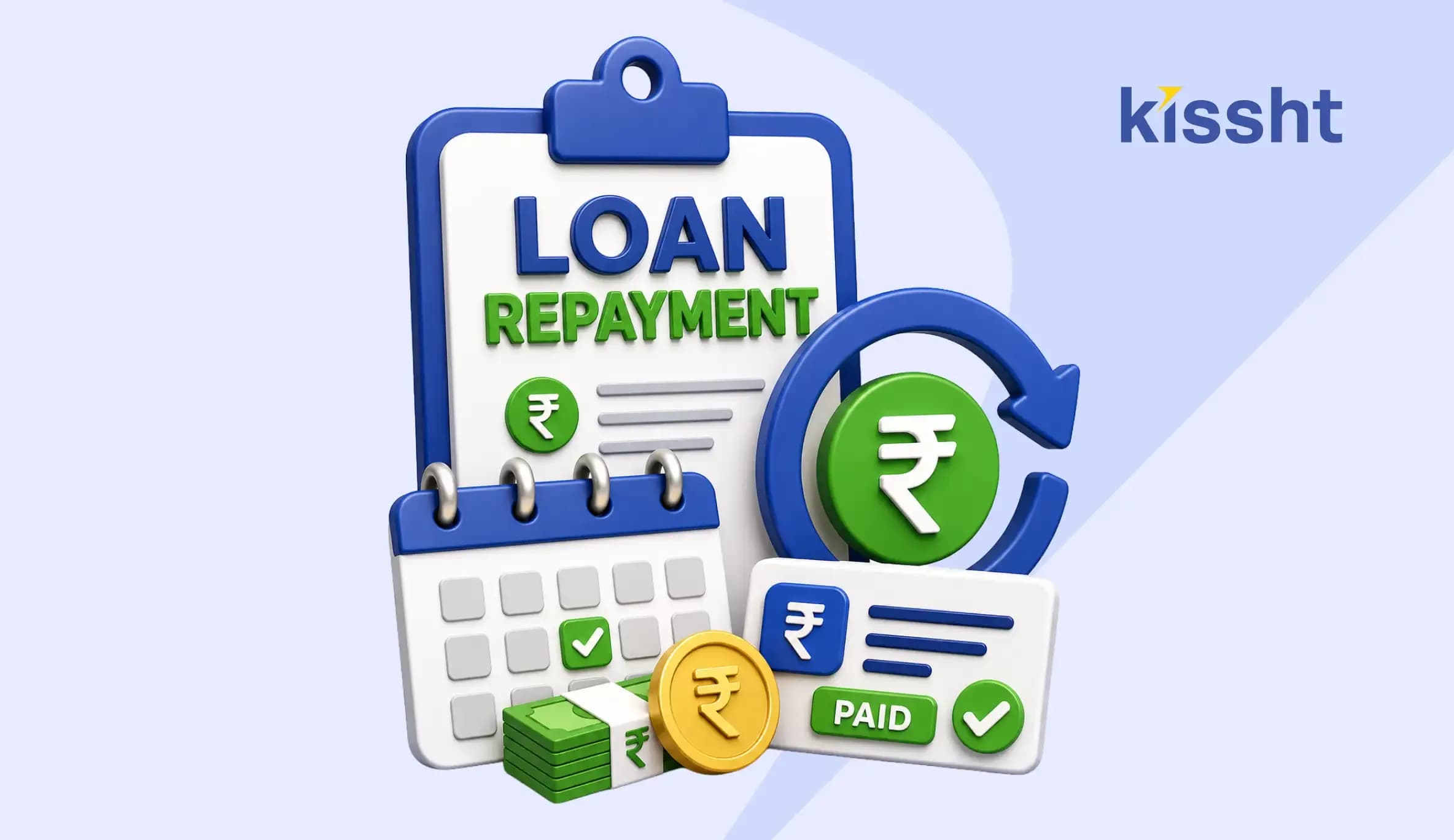
What Does Loan Repayment Mean?
Loan repayment is the process through which a borrower repays the money borrowed from a lender over the agreed loan tenure. Based on the loan agreement, repayments are usually made through Equated Monthly Installments (EMIs), which include both the principal amount and the interest charged on the loan.
Each EMI gradually reduces the outstanding loan balance until the entire amount is repaid. Some loans may also include additional charges, such as processing fees, late payment charges, or prepayment charges, as agreed with the lender. Tools such as the EMI calculator and payment reminders available on Kissht help borrowers stay organised throughout the loan tenure.
Timely loan repayment helps borrowers maintain a good credit score, avoid penalties, and improve their chances of getting future credit. Missing or delaying repayments, on the other hand, may result in overdue payments, additional charges, and a negative impact on the borrower’s credit history.
Common Loan Repayment Methods
| Method | Meaning |
|---|---|
| Equated Monthly Installments (EMIs) | Fixed monthly payments that include both principal and interest. |
| Foreclosure | The borrower repays the entire outstanding loan amount before the tenure ends. |
| Part-Prepayment | The borrower repays a portion of the loan amount that is more than one EMI. |
| Auto-Debit | EMIs are automatically deducted from the borrower’s bank account. |
| Standing Instruction | The bank transfers the EMI automatically on the due date. |
| Online Payment | Payments are made through internet banking, UPI, or mobile banking. |
| Bullet Payment (Limited to a Few Credit Products) | The borrower pays the interest every month and repays the entire principal amount at the end of the loan tenure. |
Benefits of Timely Loan Repayments
- Builds a positive repayment history
- Prevents late payment charges and additional interest
- Keeps loan obligations under control
- Improves the chances of future loan approvals
- Shows responsible borrowing behaviour
Best Practices for Timely Loan Repayment
- Pay your EMIs on or before the due date
- Enable auto-debit to avoid missed payments
- Borrow only what you can comfortably repay
- Keep track of your repayment schedule
- Consider part-prepayment whenever financially possible
- Contact your lender if you anticipate repayment difficulties
FAQs
What is loan repayment?
Loan repayment is the process of repaying the borrowed loan amount to the lender, along with applicable interest and charges, according to the terms of the loan agreement.
Is it good to repay a loan?
Yes. Timely loan repayment helps maintain a good credit score, avoid penalties, and improve your chances of getting future loans.
Is it bad to repay a loan early?
Not necessarily. Early repayment can reduce the total interest payable, but some lenders may charge prepayment or foreclosure fees. Always check your loan terms before repaying early.
What happens if I repay my loan in full?
The lender closes your loan account, releases the pledged collateral (if applicable), and issues an NOC (No Objection Certificate).
Does loan repayment include only the principal amount?
No. Loan repayments usually include both the principal amount and the applicable interest. Some loans may also include other charges.
Related Terms

Instant Loans at Your Fingertips
Apply nowPersonal Loan
Fast, hassle-free loan for your personal needs.

Business Loan
Fuel your business growth with quick approvals.

Loan Against Property
Unlock your property’s value with ease.

Credit Pulse
Boost your credit score with smart insights.

Track your credit score
Simply enter your mobile number to get a quick overview of your credit score.
Check Now