Repo Rate
Definition:
The repo rate is the interest rate at which the Reserve Bank of India (RBI) lends short-term funds to commercial banks, with government securities as collateral.
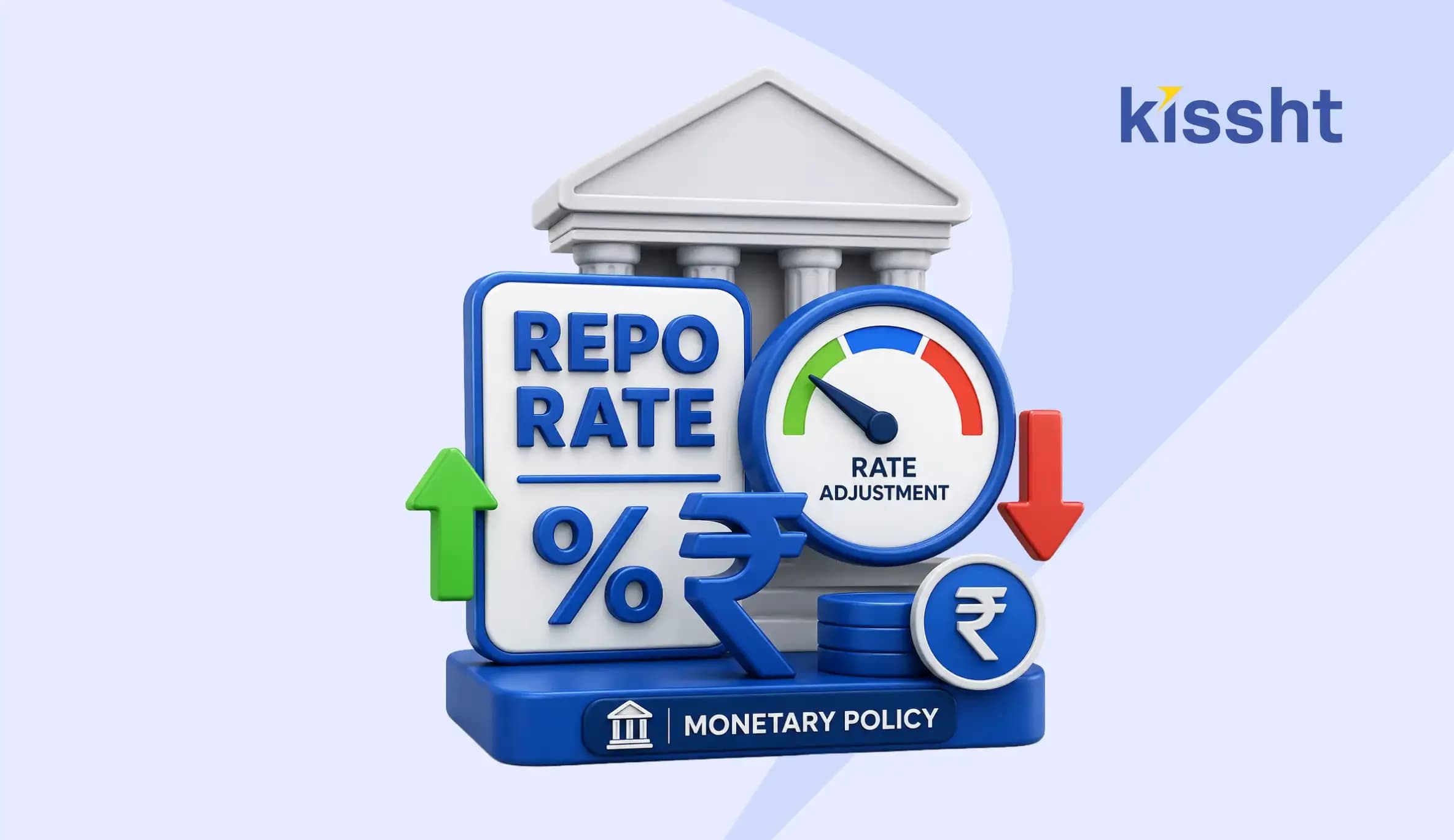
What is the Repo Rate?
Repo rate, short for Repurchase Rate or Repurchase Agreement, is the interest rate at which commercial banks borrow short-term funds from the Reserve Bank of India (RBI) against government securities pledged as collateral. It is one of the RBI’s primary monetary policy tools for managing liquidity, controlling inflation, and supporting economic growth in India.
Working of the Repo Rate
- A commercial bank borrows short-term funds from the RBI.
- The bank pledges government securities (such as bonds or treasury bills) to the RBI as collateral.
- RBI lends the required funds to the bank.
- The bank agrees to repurchase the same securities on a specified due date at a slightly higher price (the borrowed amount plus interest).
- The interest rate charged by the RBI on this borrowing is known as the repo rate.
Key Factors Determining the Repo Rate
-
Inflation levels: The RBI usually increases the repo rate during periods of high inflation to restrict borrowing and curb money supply. Conversely, it lowers the repo rate when inflation is low.
-
Recession: During a recession, the RBI decreases the repo rate to encourage borrowing and increase the flow of funds in the market.
-
Currency Depreciation: When the Indian rupee depreciates significantly, the RBI often raises the repo rate as a defence mechanism to stabilise the currency and manage the economic fallout.
Repo Rate vs Bank Rate
| Feature | Repo Rate | Bank Rate |
|---|---|---|
| Meaning | The interest rate at which commercial banks borrow short-term funds from the RBI against government securities as collateral | The interest rate at which commercial banks borrow long-term funds from the RBI without any collateral |
| Borrowing | Short-term | Long-term |
| Collateral | Government Securities (Secured) | No Collateral (Unsecured) |
| Interest Rate | Lower than the Bank Rate | Equal to or higher than the Repo Rate |
Impact of Repo Rate on Personal Loan Interest Rates
A lower repo rate can reduce personal loan interest rates, while a higher repo rate can increase them. However, it also depends on the following:
- If you have opted for a fixed-rate personal loan, changes to the repo rate will not affect your existing interest rate or EMI for the entire tenure of the loan.
- If you have opted for a floating-rate personal loan, your EMIs may change whenever the RBI revises the repo rate.
FAQs
1. What is a repo rate?
Repo rate, short for Repurchase Rate or Repurchase Agreement, is the interest rate at which commercial banks borrow short-term funds from the Reserve Bank of India (RBI) against government securities pledged as collateral.
2. Who decides the repo rate in India?
The Monetary Policy Committee (MPC) of the RBI decides the repo rate every 2 months based on the nation’s economic conditions.
3.Why does the RBI change the repo rate?
The RBI changes the repo rate to control inflation, manage liquidity, and support economic growth in India.
4. What happens if the RBI reduces the repo rate?
When the RBI reduces the repo rate, loans may become cheaper, EMIs may decrease, but interest on fixed deposits may also drop.
5. Does the repo rate affect personal loans?
Yes, changes in the repo rate can affect personal loan interest rates, especially for floating-rate loans.
Related Terms

Instant Loans at Your Fingertips


Personal Loan
Fast, hassle-free loan for your personal needs.

Business Loan
Fuel your business growth with quick approvals.

Loan Against Property
Unlock your property’s value with ease.

Credit Pulse
Boost your credit score with smart insights.

Track your credit score
Simply enter your mobile number to get a quick overview of your credit score.
Check Now