Foreclosure
Definition:
Foreclosure is the repayment of the entire outstanding loan amount before the loan tenure ends. Some lenders may charge a foreclosure fee.
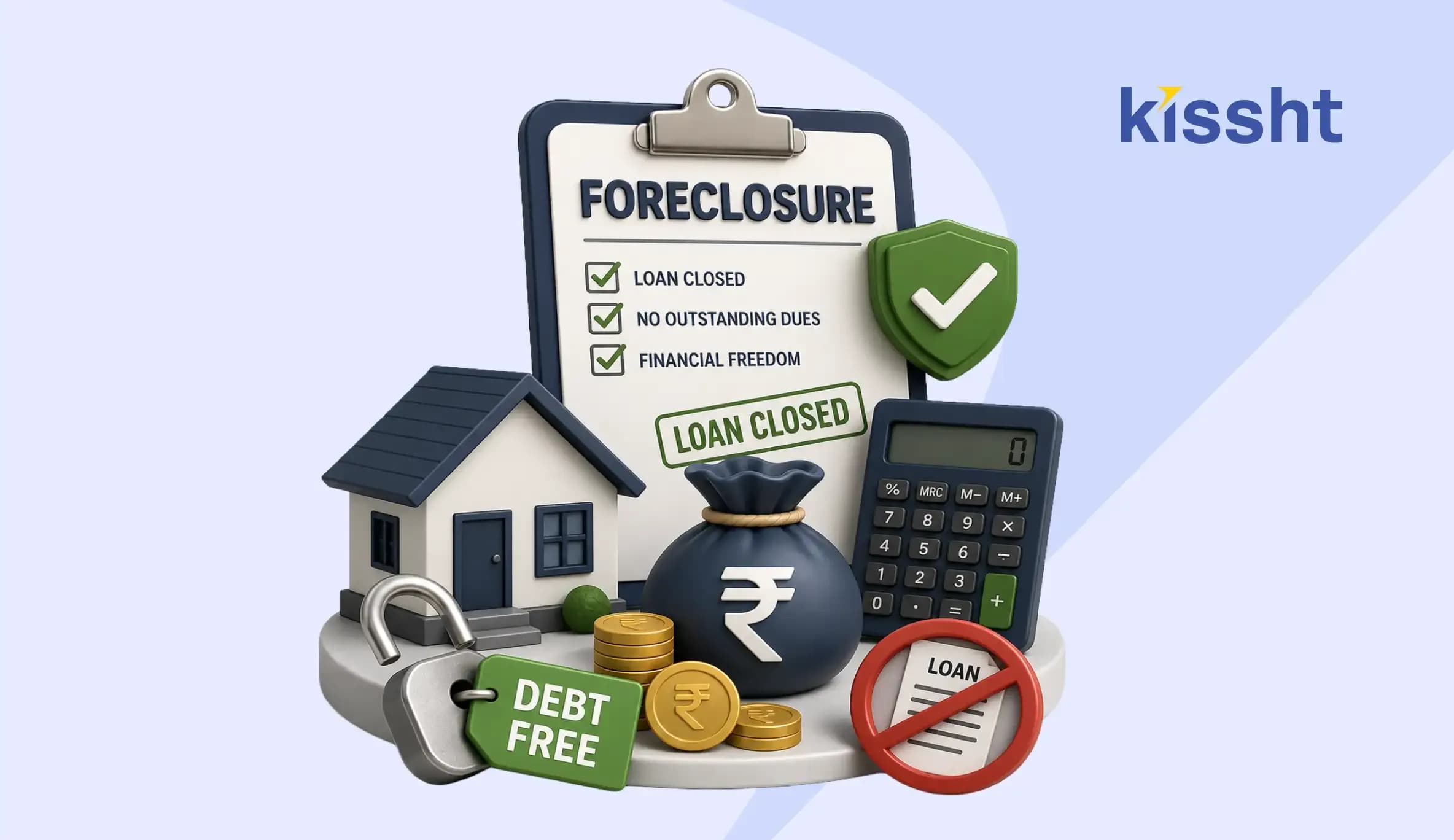
What Is Foreclosure?
Loan foreclosure allows a borrower to close the loan early by clearing the remaining dues in one payment. Depending on the lender’s terms, additional pre-closure charges may apply. It is also called loan pre-closure, early loan closure or full prepayment.
Foreclosure differs from part-prepayment. In part-prepayment, the borrower pays only part of the outstanding principal and continues paying EMIs. In foreclosure, the full amount is cleared and the loan ends.
How Does Foreclosure Work?
The process usually includes these steps:
- Review the loan agreement: Check whether early closure is allowed, any minimum EMI requirement and applicable charges.
- Request a foreclosure statement: Ask the lender for a statement showing the amount needed on a particular date.
- Check the amount: The total may include outstanding principal, interest up to the payment date, foreclosure fees, taxes and overdue charges.
- Compare the cost: Compare the remaining interest with the foreclosure amount.
- Make the payment: Pay through the lender’s official channel.
- Collect closure documents: Request a receipt, no-dues certificate, final statement and closure letter.
- Check your credit report: Confirm that the account is shown as “closed” and not “settled.”
Why Is Foreclosure Important?
Foreclosure may be useful when you have surplus money and want to reduce debt. Its possible benefits include:
- Lower interest during the remaining tenure
- Freedom from an ongoing EMI
- Better monthly cash flow
- A lower debt burden
- More flexibility for future goals
However, foreclosure is not always the best option. If charges are high or only a few EMIs remain, the savings may be limited.
Example of Foreclosure
Rahul took a personal loan of Rs 3,00,000 for three years. After paying EMIs for two years, his outstanding principal is Rs 1,05,000.
The lender provides this statement:
- Outstanding principal: Rs 1,05,000
- Interest up to payment date: Rs 1,500
- Foreclosure charge: Rs 3,150
- Taxes and other fees: Rs 567
The total payable is Rs 1,10,217.
Rahul calculates that continuing with the remaining EMIs would cost around Rs 1,16,000. He may save approximately Rs 5,783.
Before paying, he should ensure that this does not affect emergency savings or essential expenses.
Things to Consider Before Foreclosure
Keep these points in mind:
- Check for a lock-in period or minimum EMI requirement.
- Ask for a written breakup of the total amount.
- Compare the charges with the remaining interest.
- Do not use your entire emergency fund.
- Pay only through official lender channels.
- Cancel auto-debit after closure confirmation.
- Keep all receipts and closure documents.
- For secured loans, confirm that original documents and any lien are released.
The principal shown in an app may not be the final payable amount. Interest and charges may continue until the payment date.
Responsible Borrowing and Consumer Awareness
Before taking a loan from a bank, NBFC or digital lending platform such as Kissht, review the interest rate, annual percentage rate, processing fee, late charges, repayment schedule and foreclosure terms.
Do not assume that you will repay early. Select an EMI and tenure that remain affordable even if foreclosure is not possible.
Make foreclosure payments only through official channels and request written confirmation after closure.
Conclusion
Foreclosure allows you to repay the full outstanding loan amount before the original tenure ends. It may reduce future interest, remove an EMI and lower your overall debt.
Compare the savings with charges and protect money needed for emergencies. Request a written statement, pay through official channels and collect the closure documents. It is useful when it improves your finances without creating a shortage and supports better control over monthly finances.
FAQs
Is foreclosure the same as part-prepayment?
No. Foreclosure closes the entire loan, while part-prepayment only reduces the balance and the loan continues.
Do all lenders charge a foreclosure fee?
No. Charges depend on the lender, loan type, interest-rate structure and agreement. Check the terms before paying.
Does foreclosure affect the credit score?
Closing a loan does not automatically harm the credit score. Make sure the account is reported as “closed,” since “settled” has a different meaning.
What documents should I collect?
Collect the payment receipt, no-dues certificate, final statement and closure letter. For a secured loan, also confirm the return of original documents.

Related Terms

Instant Loans at Your Fingertips
Apply nowPersonal Loan
Fast, hassle-free loan for your personal needs.

Business Loan
Fuel your business growth with quick approvals.

Loan Against Property
Unlock your property’s value with ease.

Credit Pulse
Boost your credit score with smart insights.

Track your credit score
Simply enter your mobile number to get a quick overview of your credit score.
Check Now