Debt Consolidation
Definition
Debt consolidation is the process of combining multiple existing debts into a single new loan.
What is a Debt Consolidation?
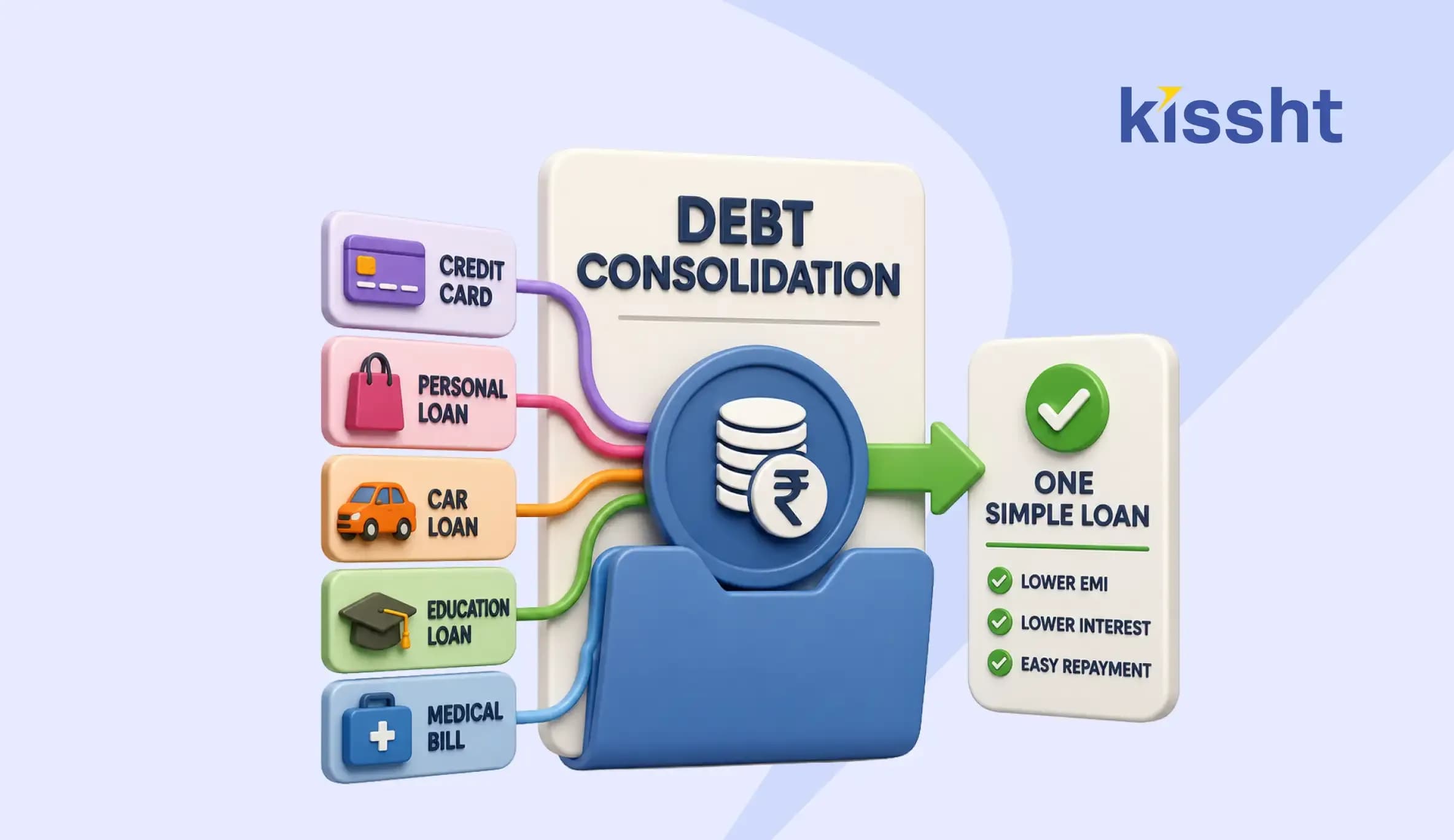
Debt consolidation is a financial strategy that involves taking a new loan to pay off multiple existing debts. Instead of managing several repayment schedules, interest rates, and due dates, borrowers make a single monthly payment toward the new loan.
The main objective of debt consolidation is to simplify debt management. In some cases, it may also reduce the overall interest cost or lower the monthly EMI by securing a lower interest rate or extending the loan tenure. However, the total cost of borrowing depends on factors such as the interest rate, loan tenure, processing fees, and other applicable charges.
Depending on your eligibility, you may apply for a personal loan on Kissht, an instant loan app, and use the personal loan EMI calculator to estimate your monthly repayments for debt consolidation.
How Does Debt Consolidation Work?
- Assess your existing debts
- Apply for a debt consolidation loan
- Get the loan approval
- Repay your existing debts
- Start repaying the new loan through regular EMIs
Benefits of Debt Consolidation
- Simplified Repayment Structure
- Easier Debt Management
- Lower Interest Rate
- Reduced Risk of Missed Payments
- Better Financial Planning
Debt Consolidation vs Debt Settlement
| Debt Consolidation | Debt Settlement |
|---|---|
| Combines multiple debts into a single loan | Involves negotiating with individual creditors to reduce the total debt |
| Requires repayment of the full loan amount | May allow the borrower to pay less than the total outstanding amount |
| Usually has less impact on credit history if repayments are made on time | Missed payments, defaults, and settlements may negatively affect the credit score |
| Suitable for borrowers who can continue repaying their debt | Often considered by borrowers facing severe financial hardship |
FAQs
What is debt consolidation?
Debt consolidation is the process of combining multiple existing debts into a single new loan.
A borrower takes a new loan to repay existing debts. After the old debts are cleared, the borrower repays only the new consolidation loan through regular EMIs.
Is debt consolidation a good idea?
It can be beneficial if it simplifies repayments, reduces the interest rate, lowers monthly EMIs, or helps you manage debt more effectively. However, borrowers should compare the total borrowing cost before applying.
What types of debt can be consolidated?
Depending on the lender, debts such as personal loans, credit card balances, medical bills, consumer loans, and other eligible unsecured loans can often be consolidated.
Does debt consolidation eliminate debt?
Debt consolidation does not eliminate debt. You are still responsible for repaying the full amount, along with any applicable charges.
Related Terms

Instant Loans at Your Fingertips
Apply nowPersonal Loan
Fast, hassle-free loan for your personal needs.

Business Loan
Fuel your business growth with quick approvals.

Loan Against Property
Unlock your property’s value with ease.

Credit Pulse
Boost your credit score with smart insights.

Track your credit score
Simply enter your mobile number to get a quick overview of your credit score.
Check Now