Debt
Definition:
Debt refers to money that a person or business owes to a lender. It must be repaid according to agreed terms, often with additional interest.
What is Debt?
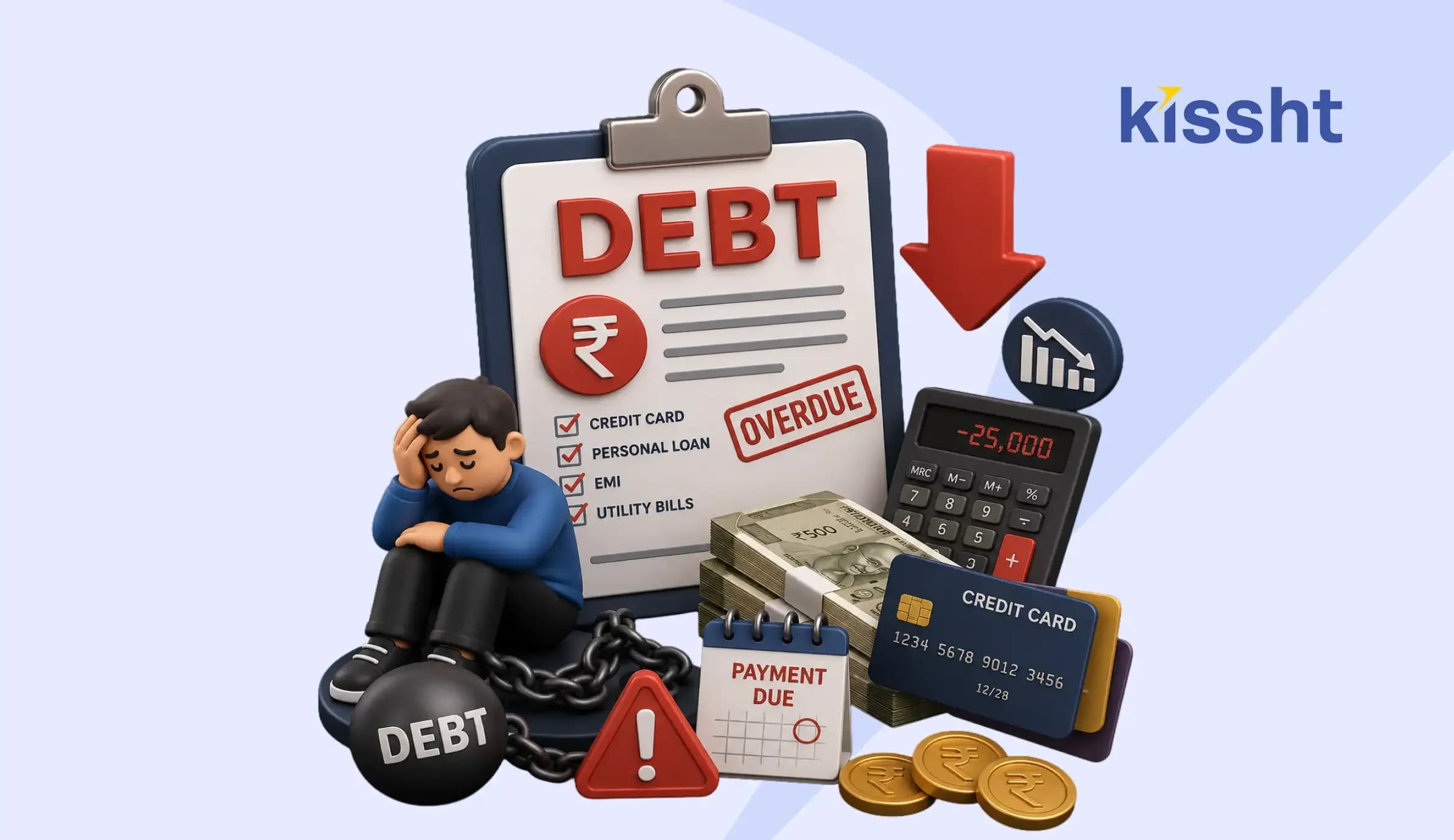
In personal finance, debt is a financial obligation created when an individual or organisation receives funds from a bank, NBFC, credit card provider or another financial institution and agrees to repay them.
The borrower agrees to repay the amount under stated terms, including the interest rate, repayment period, fees and consequences of delayed payment.
Debt may be secured or unsecured. A home loan is secured because the property is linked to it. A personal loan or credit card balance is generally unsecured because no specific asset is provided as security.
How Does Debt Work?
Debt generally works through these steps:
- You borrow money: A lender may approve an amount based on income, existing obligations, credit history and repayment capacity.
- Borrowing costs apply: The lender may charge interest and fees. Interest is the cost of using borrowed money.
- A repayment schedule is set: Many loans are repaid through equated monthly instalments, commonly called EMIs.
- You make regular payments: Each payment reduces the outstanding balance.
- The debt is closed: Once the principal, interest and charges are fully paid, the debt ends.
Missing payments may lead to charges and affect your credit profile, depending on the loan terms.
Why is Debt Important?
Debt is not automatically good or bad. Its effect depends on why you borrow, how much you borrow and whether repayment fits your budget.
Used carefully, debt may:
- Help pay for a necessary expense over time.
- Support goals such as education, home ownership or business growth.
- Provide funds during an emergency.
- Help create a repayment history when payments are made on time.
However, excessive debt can reduce the money available for daily expenses, savings and emergencies. It may also make additional borrowing harder or more expensive.
Example of Debt
Rohan needs ₹30,000 for urgent dental treatment. He takes a loan and agrees to repay ₹5,500 every month for six months.
His total repayment is: ₹5,500 × 6 = ₹33,000
The original ₹30,000 is the principal. The additional ₹3,000 is the borrowing cost, which may include interest and charges.
Before accepting the loan, Rohan should check whether the ₹5,500 EMI fits his budget. If existing expenses already use most of his income, the new debt may create repayment pressure.
Things to Consider Before Taking on Debt
Before borrowing, ask whether the expense is necessary and whether you can repay without affecting essential needs.
- Compare the annual percentage rate, or APR, instead of looking only at the EMI.
- Check the total repayment amount, tenure, processing fee and late-payment conditions.
- Read the Key Fact Statement, sanction letter and loan agreement.
- Include existing EMIs and credit card dues when checking affordability.
- Avoid borrowing more simply because a higher amount is available.
- Do not take one loan to repay another without understanding the total cost.
Whether considering an instant personal loan through Kissht or borrowing from another bank or NBFC, confirm the regulated lender’s identity and review the terms before proceeding.
Responsible Borrowing and Consumer Awareness
Borrow for a clear purpose and select an EMI that leaves enough money for food, rent, bills, savings and emergencies. RBI consumer-awareness material advises borrowers to read documents such as the Key Fact Statement, sanction letter and privacy policy. Regulated lenders must disclose important loan information so borrowers can make informed decisions.
Never share your OTP, PIN or banking password with anyone claiming to arrange a loan. Contact the lender early if repayment may be difficult.
Conclusion
Debt can help meet important financial needs, but it always creates a repayment responsibility. Before borrowing, understand the full cost, check your affordability and read all important documents.
Manageable debt should support your needs without disrupting essential expenses or savings. Borrow only what you need, choose terms you understand and repay on time.
FAQs
Is every loan a debt?
Yes. A loan creates debt because the borrower must repay the amount with interest and applicable charges.
What is the difference between debt and an EMI?
Debt is the total amount you owe. An EMI is a monthly payment used to repay certain debts.
Can debt affect my credit score?
Yes. Payment history and outstanding credit can affect your credit profile. Delayed payments may make future borrowing more difficult.
How can I reduce debt faster?
Pay installments on time, avoid unnecessary borrowing and consider part-payment when permitted. Check for prepayment charges first.
Related Terms

Instant Loans at Your Fingertips
Apply nowPersonal Loan
Fast, hassle-free loan for your personal needs.

Business Loan
Fuel your business growth with quick approvals.

Loan Against Property
Unlock your property’s value with ease.

Credit Pulse
Boost your credit score with smart insights.

Track your credit score
Simply enter your mobile number to get a quick overview of your credit score.
Check Now