Balance Transfer
A balance transfer is the process of moving an existing loan from one lender to another to get better loan terms, such as a lower interest rate or a longer repayment period.
What is a Balance Transfer?
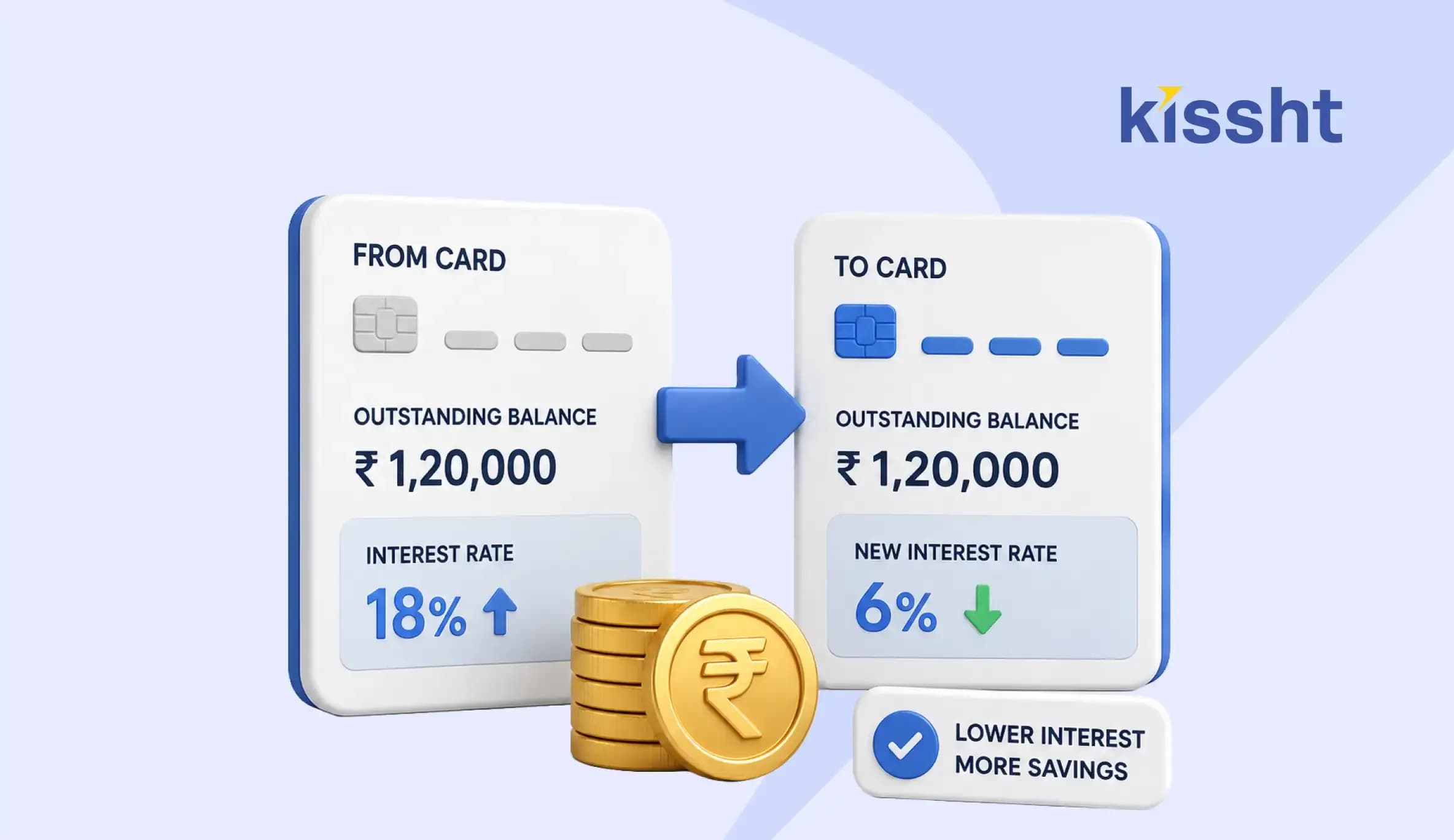
Through the balance transfer process, a borrower can move their outstanding amount of an existing loan to a new lender. Borrowers usually choose this option when another lender offers better loan terms, such as a lower interest rate, reduced EMI, a flexible repayment tenure, or access to a top-up loan. Instead of continuing repayments with the current lender, the borrower closes the existing loan through the new lender and repays the transferred loan according to the revised terms and conditions.
A balance transfer can help reduce the overall cost of borrowing if the new loan offers better financial benefits. Before choosing this option, borrowers should compare the new interest rate, processing fees, foreclosure charges, repayment tenure, and total loan cost. A balance transfer is generally suitable for borrowers who have maintained a good repayment history and want to improve their loan affordability or manage their finances more effectively.
How Does a Balance Transfer Work?
Step 1: Compare loan offers, check your eligibility, and apply for a balance transfer with the new lender
Step 2: Submit the required documents, including KYC, income proof, and loan details
Step 3: The new lender verifies your application and approves the balance transfer if you meet the eligibility criteria
Step 4: The new lender pays the outstanding loan amount directly to the old lender to close the previous loan account
Step 5: Your old account closes, and you start repaying the transferred loan to the new lender under the revised loan terms
Benefits of Loan Balance Transfer
- A balance transfer provides the option to switch to a lender with better services and benefits
- A lower interest rate can reduce the overall cost of your loan
- Lower EMIs can make monthly loan repayments more affordable
- A flexible repayment tenure can match your financial needs
- A top-up loan can provide additional funds for eligible borrowers
- Better loan terms can improve overall borrowing experience
FAQs
A balance transfer is the process of moving an existing loan from one lender to another to get better loan terms, such as a lower interest rate or a longer repayment period.
Who is eligible for a balance transfer?
Borrowers with an active loan, stable income, a good repayment history, and a suitable credit profile may qualify, subject to lender policies.
Can I get a top-up loan with a balance transfer?
Yes. Some lenders offer a top-up loan if you meet their eligibility criteria.
Does a balance transfer affect my credit score?
A balance transfer may cause a temporary impact due to the loan application, but timely repayments can support a healthy credit score.
How long does a balance transfer take in India?
A balance transfer in India generally takes 3 to 7 days, but the timeline depends on the lender’s process, document verification, and loan approval.
Related Terms

Instant Loans at Your Fingertips
Apply nowPersonal Loan
Fast, hassle-free loan for your personal needs.

Business Loan
Fuel your business growth with quick approvals.

Loan Against Property
Unlock your property’s value with ease.

Credit Pulse
Boost your credit score with smart insights.

Track your credit score
Simply enter your mobile number to get a quick overview of your credit score.
Check Now