KYC
Definition:
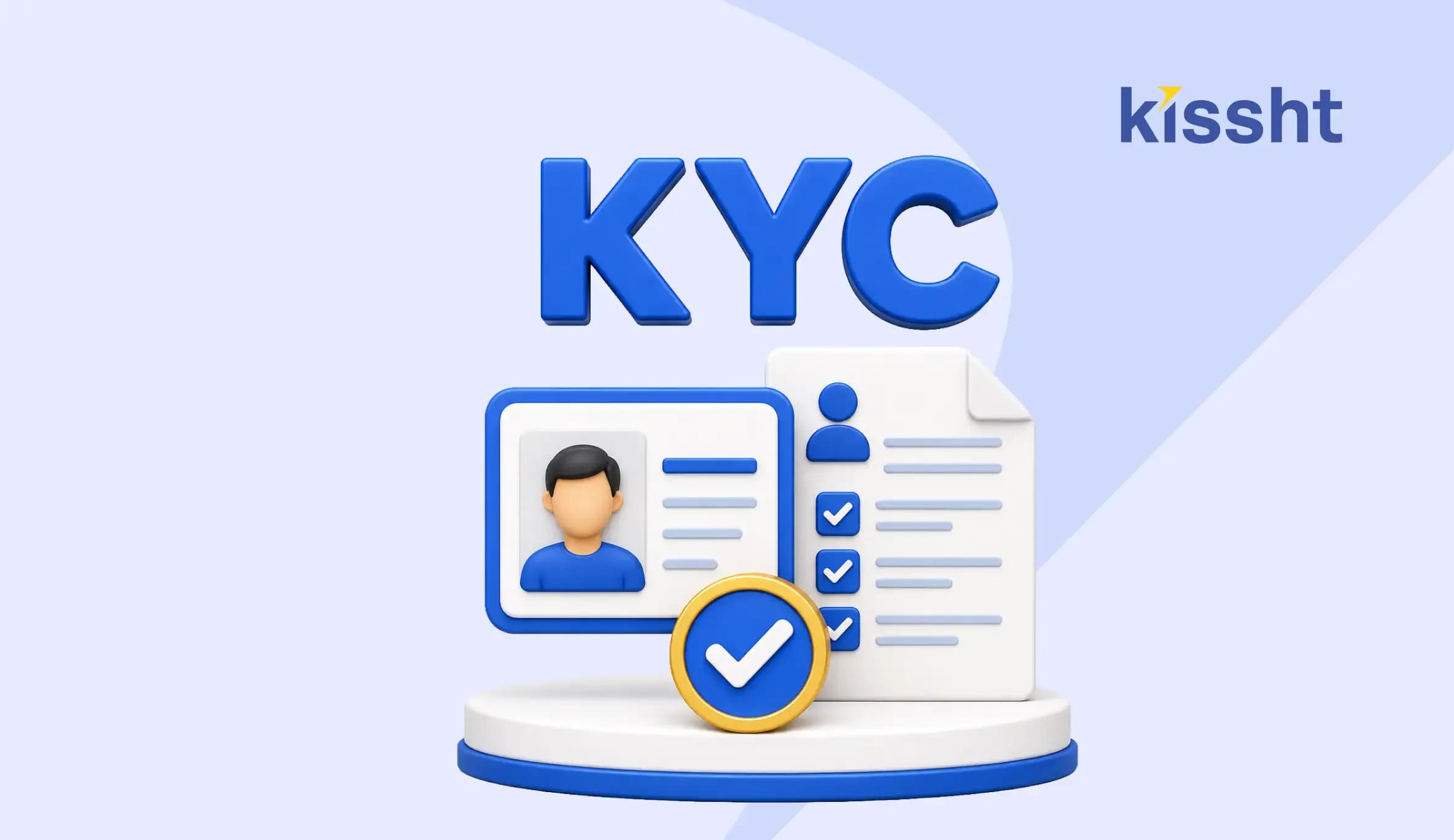
Know Your Customer (KYC) is the process of verifying a customer's identity before providing financial services. It helps prevent fraud and misuse.
Why is KYC Important?
KYC is an important part of the financial ecosystem because it helps create a safer and more transparent environment for institutions and customers alike.
Some key benefits of KYC include:
- Helps prevent identity theft and fraud
- Reduces the risk of money laundering activities
- Protects customers from unauthorised transactions
- Ensures compliance with regulatory requirements
- Enables financial institutions to verify customer information accurately
Without KYC verification, many financial products and services may be inaccessible to customers.
How Does KYC Work?
The KYC process typically involves verifying an individual's identity and address using officially valid documents.
The process generally includes:
- Submission of identity and address proof documents.
- Verification of the information provided.
- Validation of customer details by the financial institution.
- Approval and activation of the requested financial product or service.
Today, many institutions offer digital verification methods, making KYC faster and more convenient than traditional paper-based verification.
Documents Required for KYC
The exact requirements may vary depending on the institution and product. However, commonly accepted documents include proof of identity and proof of address.
Identity Proof
- Aadhaar Card
- PAN Card
- Passport
- Driving Licence
- Voter ID
Address Proof
- Aadhaar Card
- Passport
- Utility Bills
- Driving Licence
- Bank Account Statement
In some cases, additional documents may be required depending on regulatory requirements.
What is eKYC?
eKYC, or Electronic Know Your Customer, is a digital version of the KYC process.
Instead of submitting physical documents, customers can complete identity verification electronically through approved digital channels. This has significantly reduced onboarding time for various financial products, including bank accounts, investment products, and digital lending services.
eKYC has become increasingly popular because it offers:
- Faster verification
- Reduced paperwork
- Improved convenience
- Enhanced customer experience
Example of KYC
Suppose an individual applies for a personal loan through a digital lending platform.
Before the lender can process the application, the applicant must complete KYC by providing documents such as their PAN card and Aadhaar card. Once the information is verified, the lender can proceed to assess the loan application and determine eligibility.
This helps ensure that the applicant's identity is genuine and that the financial institution complies with regulatory requirements.
Things to Keep in Mind During KYC
To avoid delays and ensure a smooth verification process, customers should provide accurate and up-to-date information.
- Ensure that submitted documents are valid and clearly visible.
- Keep personal information consistent across documents.
- Verify that they are sharing information only with legitimate financial institutions.
- Avoid sharing KYC documents with unknown individuals or unverified apps.
Being cautious while sharing personal information can help protect against fraud and identity misuse.
Conclusion
KYC is a crucial process that helps financial institutions verify customer identities and maintain a secure financial ecosystem. Whether you're opening a bank account, investing, purchasing insurance, or applying for a loan, completing KYC is often the first step toward accessing financial services.
By understanding the KYC process, keeping documents up to date, and sharing information only with trusted institutions, individuals can complete verification smoothly while protecting themselves from fraud and identity theft.
FAQs
Is KYC mandatory for financial services?
Yes, KYC is generally mandatory for many financial products and services, including bank accounts, loans, insurance policies, and mutual fund investments.
What is the difference between KYC and eKYC?
Traditional KYC may require submitting physical documents, whereas eKYC allows customers to complete verification digitally.
Can I complete KYC online?
Yes, many financial institutions now offer online KYC (eKYC) services, subject to applicable regulatory guidelines.
What happens if my KYC is not completed?
Incomplete KYC may restrict access to certain financial products and services until verification requirements are fulfilled.
Related Terms

Instant Loans at Your Fingertips
Apply nowPersonal Loan
Fast, hassle-free loan for your personal needs.

Business Loan
Fuel your business growth with quick approvals.

Loan Against Property
Unlock your property’s value with ease.

Credit Pulse
Boost your credit score with smart insights.

Track your credit score
Simply enter your mobile number to get a quick overview of your credit score.
Check Now