CIBIL Full Form Explained: Everything You Need To Know
Many people carefully plan their finances when moving to a new home, purchasing appliances on EMI, or taking an instant personal loan for home improvements. While budgeting for these expenses is important, another factor that often influences whether your loan application is approved is your CIBIL score.
The term ‘CIBIL score’ is not new. Yet many borrowers are unsure what CIBIL means, how their scores are calculated, or why lenders place so much importance on them. From credit cards to loans obtained through an instant loan app, this 3-digit number can influence your access to credit and the terms you receive. In this blog, we'll break down everything you need to know about CIBIL, how it works, and why maintaining a healthy score matters.
What is CIBIL?
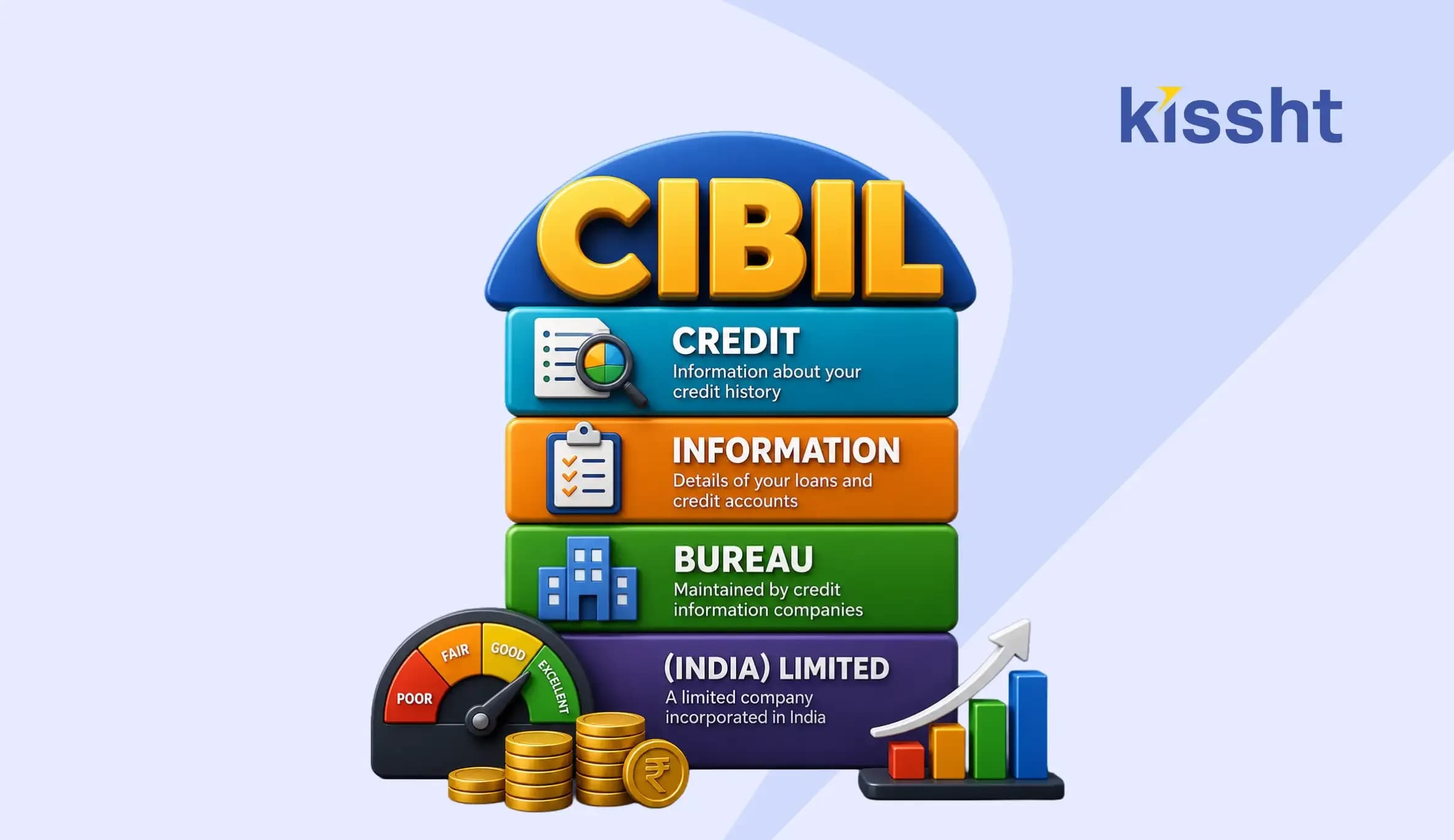
The full form of CIBIL is Credit Information Bureau (India) Limited. In simple words, CIBIL is India’s oldest and most widely recognised credit bureau, responsible for collecting and maintaining the credit history of millions of individuals and businesses.
CIBIL gathers information from banks, non‑banking financial companies (NBFCs), credit card issuers, and other financial institutions to create a comprehensive record of a borrower’s credit behaviour and repayment history. Based on this data, it generates a credit report and a CIBIL score, which summarises creditworthiness in a 3-digit number.
What does a CIBIL score mean?
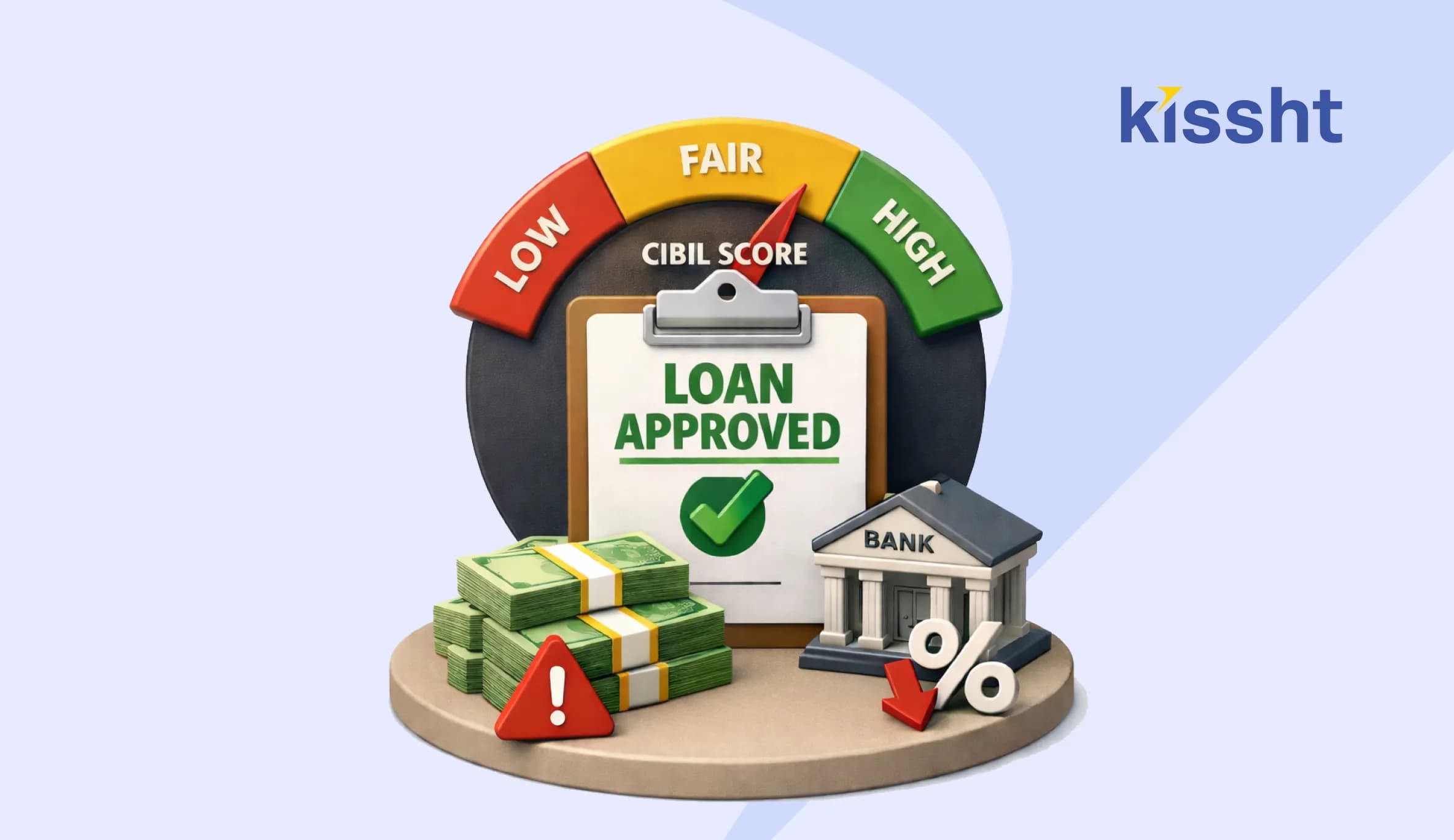
A CIBIL score is a 3-digit number that highlights your creditworthiness based on your past borrowing and repayment behaviour. It essentially tells lenders how likely you are to repay loans or credit on time. The score ranges from 300 to 900, with higher scores indicating better credit health.
A high CIBIL score (usually above 750) suggests that you have a strong history of timely repayments and responsible credit usage. Conversely, a lower score indicates potential risk to lenders, often due to missed payments, defaults, or high credit utilisation.
Lenders use your CIBIL score, along with your credit report, to determine loan amounts, interest rates, and eligibility. Thus, maintaining a good CIBIL score involves paying EMIs and credit card bills on time, keeping credit utilisation low, and avoiding multiple loan applications in a short period.
What is a CIBIL score range?
Your CIBIL score falls into different categories that help lenders assess your creditworthiness.
| Range | Rating | Meaning |
|---|---|---|
| 300-499 | Poor | High-risk borrowers |
| 500-649 | Fair | Limited credit approval & high-interest rates |
| 650-749 | Good | Better chance for loan approvals |
| 750-900 | Excellent | Low-risk borrowers |
How to calculate CIBIL score?
The TransUnion CIBIL calculates your CIBIL score using a proprietary algorithm that evaluates your financial history as mentioned in your Credit Information Report (CIR). The score is based on five key factors that show how responsibly you manage credit.
- Payment history: Timely payment of EMIs, credit card bills, and other outstanding dues improves your score.
- Credit utilisation ratio: This measures how much of your credit you use out of your total available credit limit. Maintaining this ratio below 30% is generally considered ideal.
- Credit length: A longer credit history with consistent on-time payments positively impacts your score.
- Credit mix: A healthy balance of unsecured and secured loans can show better credit management.
- New applications: Applying for multiple loans or credit cards in a short period triggers hard inquiries, which can lower your score.
How to check and improve your CIBIL score?
Checking your CIBIL score has become easier over time, with options such as official CIBIL sites, banking apps, UPI apps, and financial services platforms like Kissht that integrate score checks. Some of the best practices to improve your credit score are:
- Paying EMIs and bills on time every month
- Reducing credit card balances
- Avoiding multiple loan applications at once
- Regularly reviewing your credit report for errors
Beyond numbers, your CIBIL score reflects your credit habits and financial discipline over time. Lenders in India rely on this score to assess your eligibility for instant personal loan offers, credit cards, and even business loans. A higher score increases your chances of loan approval and lower interest rates, while a lower score labels you as a high-risk borrower.
With Kissht, an instant loan app, you can conveniently track your CIBIL score, check your loan eligibility, and take informed steps towards achieving your financial goals.
FAQs
1. What is CIBIL in simple words?
The CIBIL full form stands for Credit Information Bureau (India) Limited. It is a credit bureau that reports your credit history and provides a three-digit score that reflects your creditworthiness.
2. What are the 5 C’s of credit rating?
The 5 C’s lenders often consider are Character (repayment history), Capacity (ability to repay), Capital (financial reserves), Collateral (security), and Conditions (economic and loan terms).
3. What is the biggest killer of credit scores?
Late payments or missed EMIs can significantly reduce your credit score.
4. How often should I check my CIBIL score?
It’s a good practice to check your CIBIL score at least once every 1-3 months.
5. What is the difference between a CIBIL report and a CIBIL score?
The CIBIL report is a detailed record of your credit history, while the CIBIL score is a three-digit summary (300–900) derived from that report.
How to Download Credit Score Report for Free?
 Previous
Best Health Insurance for Senior Citizens in India 2026


Kissht Research TeamTeam Kissht - Authors
Thank You for reading the Kissht blog. Behind every article is the Kissht Content & Research Team, working to make sure you always find clear, reliable answers to your personal finance questions.Thank you for reading the Kissht blog. Behind every article is the Kissht Content & Research Team, working to make sure you always find clear, reliable answers to your personal finance questions.

Instant Loans at Your Fingertips
Apply nowPersonal Loan
Fast, hassle-free loan for your personal needs.

Business Loan
Fuel your business growth with quick approvals.

Loan Against Property
Unlock your property’s value with ease.

Credit Pulse
Boost your credit score with smart insights.

Track your credit score
Simply enter your mobile number to get a quick overview of your credit score.
Check Now
Related articles
Jul 18, 2026
Does Increasing Your Credit Limit Impact Your Credit Score?
Jul 9, 2026
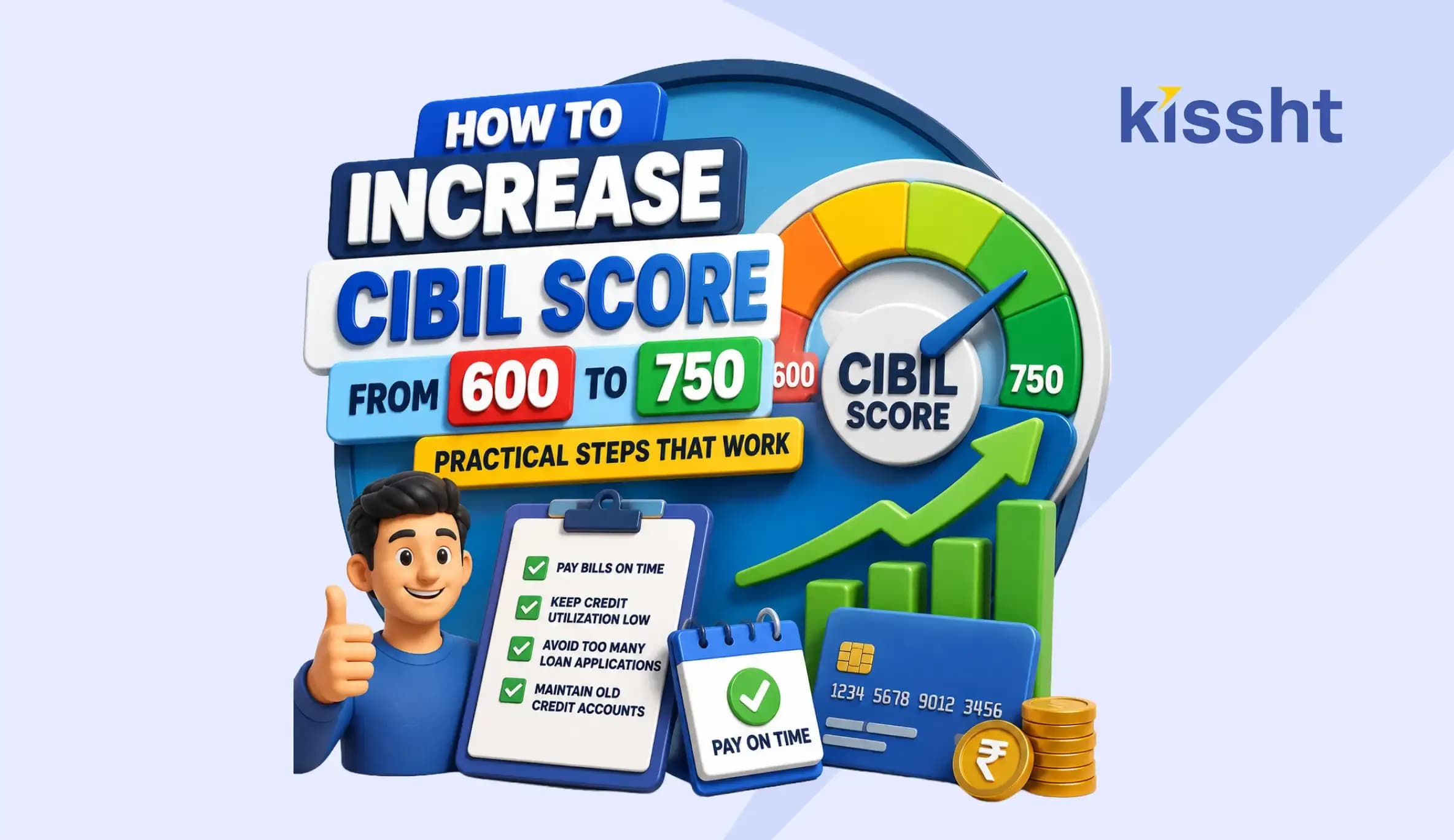
How to Increase CIBIL Score from 600 to 750: Practical Steps That Work
Jun 20, 2026
Credit Score for Women in India: 8 Practical Ways to Improve Your CIBIL Score in 2026
Jun 18, 2026
750 Credit Score: Is It Good or Bad?
Jun 10, 2026
Does Checking Your Credit Score Affect Your CIBIL Score?
Jun 11, 2026
How to Improve Your Credit Score Before Applying for a Loan
Jun 11, 2026
How to Download Credit Score Report for Free?
May 26, 2026
फ्री में CIBIL स्कोर कैसे चेक करें
May 25, 2026
Minimum Credit Score Required for a Personal Loan
Apr 19, 2026
Credit Card Without CIBIL Score: How to Apply & Best Options in India
Feb 23, 2026
Is a 750 Credit Score Good in India?
Jan 28, 2026

