Variable Interest Rate
Definition:
A variable interest rate is an interest rate that changes (increases or decreases) over time in response to underlying market conditions during the loan tenure.
What is a Variable Rate of Interest?
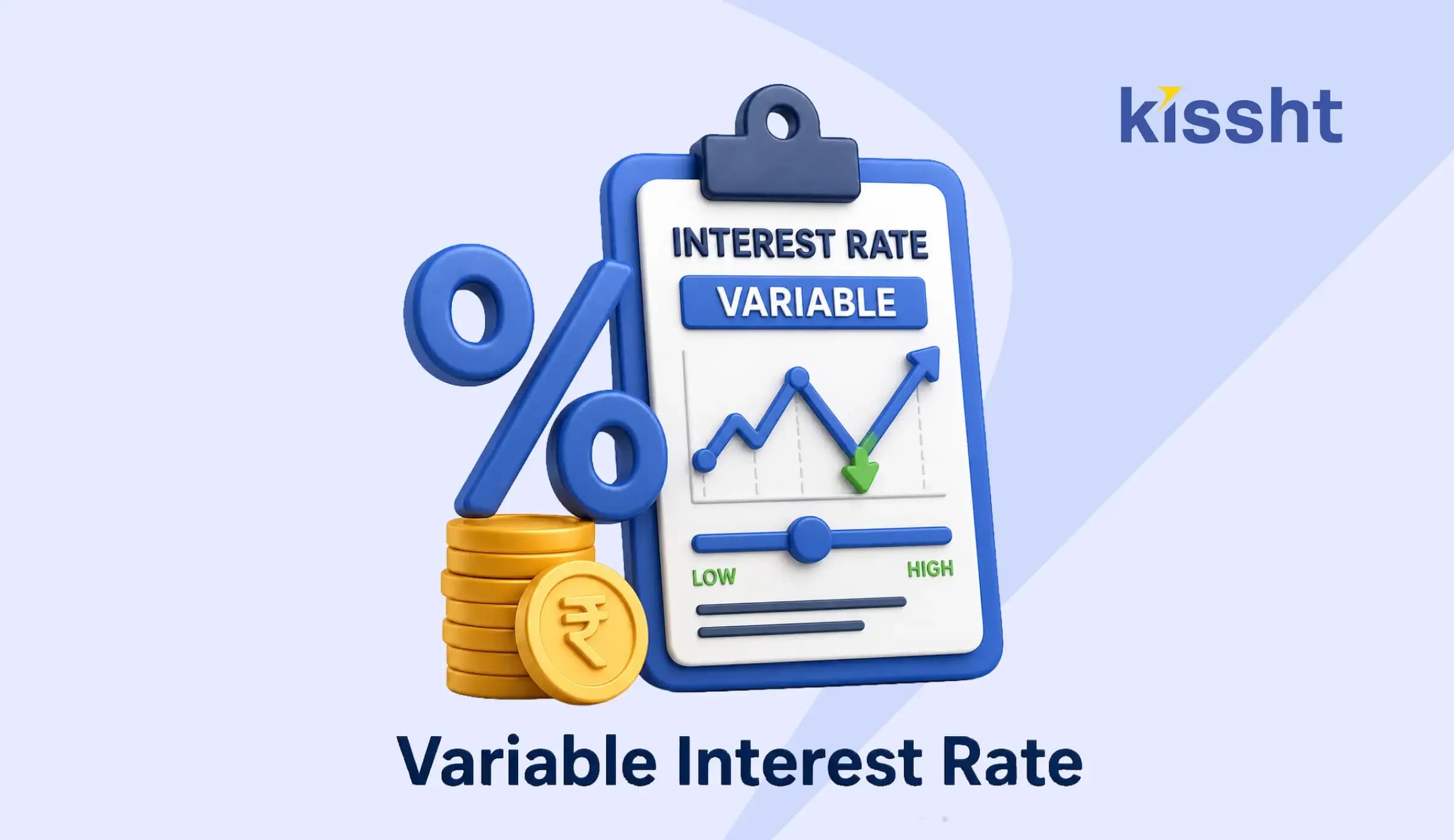
A variable interest rate, also known as a floating interest rate or adjustable interest rate, does not remain fixed throughout the loan tenure. Instead, it fluctuates with changes in market conditions and external benchmark rates, such as the lender’s benchmark lending rate, the repo rate, or other market interest rates.
When the repo rate increases, the bank’s borrowing costs increase. This leads to higher variable interest rates and increased EMIs for borrowers.
When the repo rate decreases, the bank’s borrowing costs decrease. This leads to lower variable interest rates and reduced EMIs for borrowers.
Because floating interest rates vary during the loan tenure, a loan EMI calculator can help estimate your EMI.
Benefits of a Variable Rate of Interest
- Lower Initial Interest Rates
- More Affordable in the Short Term
- Capitalising on Market Drops
- Zero Prepayment Penalties
- Potential Interest Savings
Factors That Affect Variable Interest Rates
- Central Bank Policies
- Benchmark Interest Rates
- Inflation
- Money Supply & Demand
- Other Market & Economic Conditions
- Credit History of the Borrower
- Loan-to-Value Ratio
- Debt-to-Income Ratio
Who Should Choose a Variable Rate of Interest?
Borrowers who:
- Expect market interest rates to decline
- Have financial flexibility to manage possible EMI increases
- Taking a long-term loan, such as a home loan
- Prefer lower initial interest rates
- Plan to repay the loan early
Variable Rate of Interest vs Fixed Rate of Interest
| Basis | Variable Rate of Interest | Fixed Rate of Interest |
|---|---|---|
| Interest Rate | Changes during the loan tenure | Remains the same throughout the loan tenure |
| EMIs | May increase or decrease | Remains constant |
| Initial Rate | Usually lower | Remains constant |
| Market Conditions | Changes with market conditions | Unaffected by market conditions |
| Risk Level | Higher due to rate fluctuations | Lower due to fixed repayments |
| Potential Savings | Possible if interest rates decline | No benefit |
| Best For | Borrowers expecting interest rates to fall | Borrowers seeking stable repayments |
FAQs
What is a variable rate of interest?
A variable interest rate is an interest rate that changes (increases or decreases) over time in response to underlying market conditions during the loan tenure.
Is a variable interest rate good?
A variable interest rate can be a good option if market interest rates are expected to fall. However, it also carries the risk of higher EMIs if rates increase.
Which loans have variable interest rates?
Variable interest rates are commonly offered on home loans, business loans, and some personal loans.
Can you switch from a floating interest rate to a fixed interest rate?
Yes. You can switch to a fixed interest rate, subject to the lender's terms and applicable conversion charges.
How often does a variable interest rate change?
Variable interest rates are typically revised quarterly or semi-annually, depending on your loan’s reset clause and external benchmarks.
Related Terms

Instant Loans at Your Fingertips


Personal Loan
Fast, hassle-free loan for your personal needs.

Business Loan
Fuel your business growth with quick approvals.

Loan Against Property
Unlock your property’s value with ease.

Credit Pulse
Boost your credit score with smart insights.

Track your credit score
Simply enter your mobile number to get a quick overview of your credit score.
Check Now