Emergency Fund
Definition:
An Emergency Fund is money set aside to cover unexpected expenses such as medical emergencies, job loss, or urgent repairs. It provides financial security during difficult situations.
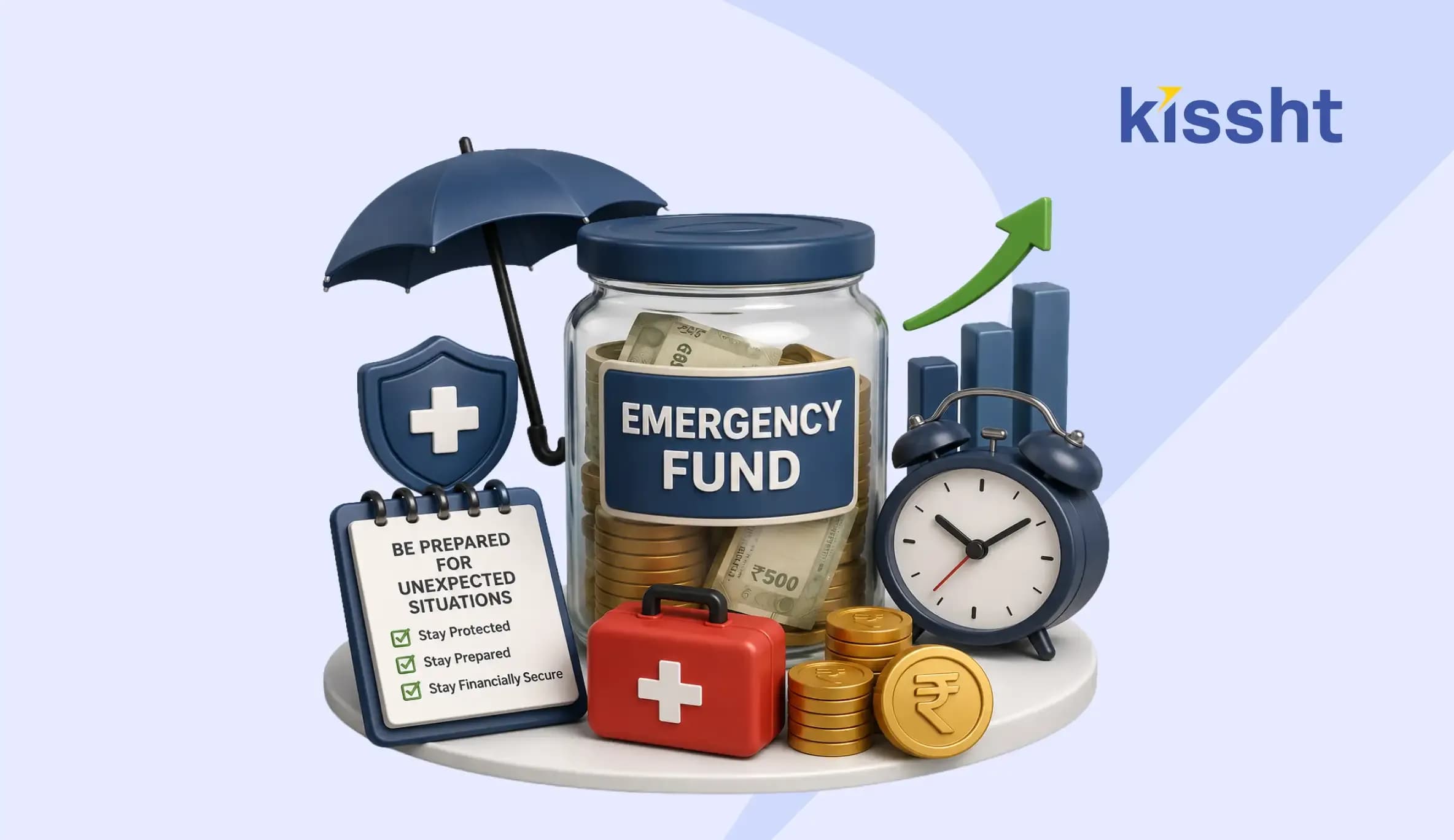
What Is an Emergency Fund?
An Emergency Fund is a dedicated amount of money saved to cover urgent and unplanned expenses. It acts as a financial safety net when your regular income or monthly budget is not enough to manage an unexpected situation.
You may use this fund for expenses such as:
- Emergency medical treatment
- Sudden loss of income
- Essential home or vehicle repairs
- Urgent travel due to a family emergency
- Temporary business or income disruption
An emergency fund should not be used for planned expenses such as holidays, shopping, festivals, gadgets or entertainment. These expenses should ideally be managed through a separate savings plan.
How Does an Emergency Fund Work?
Building an emergency fund does not require you to save a large amount immediately. You can develop it gradually by following a structured process.
Calculate your essential monthly expenses
Add expenses that you must pay every month, such as rent, groceries, utility bills, school fees, insurance premiums, loan EMIs and basic transportation costs.
Set a savings target
A commonly used target is three to six months of essential expenses. However, the right amount depends on your income, job stability, dependants and financial responsibilities.
Start with a smaller goal
Saving several months of expenses may initially seem difficult. Begin with a manageable amount, such as Rs 10,000 or one month of essential expenses.
Save regularly
Transfer a fixed amount to your emergency savings account every month. Automating the transfer shortly after receiving your salary can help you remain consistent.
Use the money only for genuine emergencies
Before withdrawing money, ask whether the expense is urgent, necessary and unexpected. If it does not meet these conditions, avoid using the fund.
Rebuild the fund after using it
Once the emergency has passed, restart your monthly contributions until the fund returns to its original target.
Why Is an Emergency Fund Important?
An Emergency Fund can protect your finances in several practical ways.
- Reduces dependence on debt: You may not need to use a credit card or take a loan for every unexpected expense.
- Protects long-term investments: You can avoid withdrawing money from fixed deposits, mutual funds or retirement savings before their intended purpose.
- Supports you during income loss: The fund can help cover essential bills while you search for a new job or recover from a temporary income disruption.
- Provides financial confidence: Knowing that money is available for emergencies can reduce stress and improve financial decision-making.
- Prevents missed payments: Emergency savings can help you continue paying rent, EMIs, insurance premiums and utility bills during a difficult period.
Why Is an Emergency Fund Important?
An Emergency Fund can protect your finances in several practical ways.
- Reduces dependence on debt: You may not need to use a credit card or take a loan for every unexpected expense.
- Protects long-term investments: You can avoid withdrawing money from fixed deposits, mutual funds or retirement savings before their intended purpose.
- Supports you during income loss: The fund can help cover essential bills while you search for a new job or recover from a temporary income disruption.
- Provides financial confidence: Knowing that money is available for emergencies can reduce stress and improve financial decision-making.
- Prevents missed payments: Emergency savings can help you continue paying rent, EMIs, insurance premiums and utility bills during a difficult period.
Example of an Emergency Fund
Suppose Priya lives in Pune and earns Rs 55,000 per month. Her essential monthly expenses are:
- Rent: Rs 15,000
- Groceries: Rs 7,000
- Utility and mobile bills: Rs 3,000
- Transportation: Rs 4,000
- Insurance and EMI payments: Rs 8,000
- Other essential expenses: Rs 3,000
Her total essential monthly expenses are Rs 40,000.
If Priya wants an emergency fund covering three months, her target would be:
Rs 40,000 × 3 = Rs 1,20,000
She can begin by saving Rs 5,000 every month. Although reaching the complete target will take time, even the initial savings can help her manage smaller emergencies without disturbing her regular budget.
Things to Consider While Building an Emergency Fund
Keep the following points in mind:
- Store the money in a separate savings account so that it is not mixed with regular spending money.
- Choose an option that allows quick withdrawals when required.
- Avoid putting the entire fund into risky or highly volatile investments.
- Review your target whenever your income, family responsibilities or essential expenses change.
- Increase your monthly contribution after a salary raise or when an existing EMI ends.
- Do not stop saving simply because the target appears large. Consistency is more important than the starting amount.
A common mistake is treating available credit as an emergency fund. Credit cards and loans involve repayment obligations, interest and possible charges. They may be useful in certain situations, but they are not a replacement for personal savings.
Emergency Funds and Responsible Borrowing
Sometimes an emergency may cost more than the amount available in your savings. In such cases, borrowing may be considered after reviewing the repayment terms carefully.
Before borrowing from a bank, NBFC or digital lending platform such as Kissht, check the interest rate, annual percentage rate, processing charges, late-payment fees and total repayment amount. Borrow only what you can reasonably repay without affecting essential household expenses.
You should also verify that the lender is regulated or works with a regulated lending institution. Never share OTPs, passwords or banking details with unknown individuals claiming to offer urgent loans.
Conclusion
An Emergency Fund is not meant to generate high returns or pay for lifestyle expenses. Its main purpose is to protect you from sudden financial shocks.
Start with a realistic target, save a fixed amount consistently and keep the money easily accessible. Even a small emergency fund can make a meaningful difference when an unexpected expense arises. Over time, building this financial cushion can reduce your dependence on borrowing and help you manage emergencies with greater stability and confidence.
FAQs
How much money should I keep in an Emergency Fund?
Many people aim to save three to six months of essential expenses. You may need a larger amount if your income is irregular, you are self-employed or several family members depend on your earnings.
Where should I keep my emergency savings?
The money should be kept somewhere safe, separate and easily accessible. A dedicated savings account or suitable short-term deposit with convenient withdrawal access may be considered.
Can I use my Emergency Fund to pay an EMI?
You may use it for an EMI if your income has unexpectedly stopped or reduced and missing the payment could create financial difficulty. It should not be used regularly to manage an unaffordable loan.
Should I build an emergency fund before investing?
It is generally helpful to create at least a basic emergency cushion before committing large amounts to long-term investments. This reduces the need to sell investments during an urgent situation.
Related Terms

Instant Loans at Your Fingertips
Apply nowPersonal Loan
Fast, hassle-free loan for your personal needs.

Business Loan
Fuel your business growth with quick approvals.

Loan Against Property
Unlock your property’s value with ease.

Credit Pulse
Boost your credit score with smart insights.

Track your credit score
Simply enter your mobile number to get a quick overview of your credit score.
Check Now