Asset
Definition:
An asset is anything valuable that a person or business owns and can use to generate value or financial benefit. Assets may include cash, property, vehicles, investments, or business equipment and often contribute to financial strength.
What is an Asset?
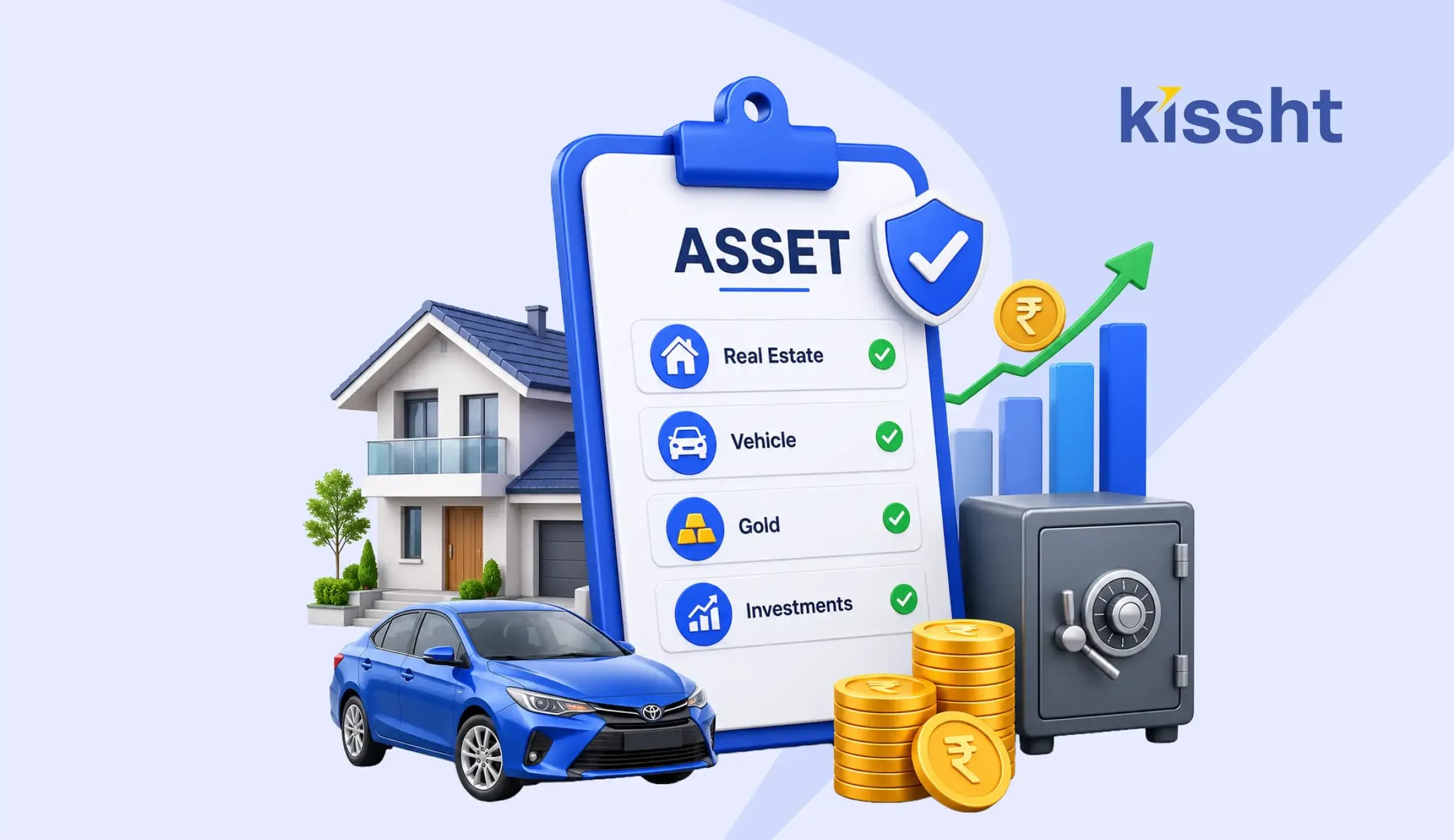
An asset is anything owned by a person, family, or business that has economic value. In simple words, it is something valuable that can be used, sold, or converted into money in the future.
For an individual, assets may include cash, savings, gold, property, investments, vehicles, or household items with resale value. For a business, assets may include stock, machines, computers, tools, delivery vehicles, and customer dues.
Common Types of Assets
Assets can be grouped in different ways, but these are the common types:
- Cash and bank balance: Money available in hand or in a bank account.
- Physical assets: Gold, property, land, vehicles, furniture, machines, and equipment.
- Financial assets: Fixed deposits, mutual funds, shares, bonds, and other investments.
- Business assets: Shop stock, computers, tools, raw materials, and customer dues.
How Does an Asset Work?
An asset works by holding value, generating income, or supporting future financial needs. Here is a simple way to understand it:
- You own something valuable, such as money, gold, property, a vehicle, or business equipment.
- The asset has a measurable value. If your scooter can be sold for Rs 55,000, that is its approximate current value.
- Its value can change over time. Gold or land may rise in value, while vehicles and electronics usually depreciate.
Why are assets Important?
An asset is important because it gives a clearer picture of your financial position and shows how much support you may have during planned or unexpected expenses.
- Financial security: Assets can help during emergencies such as medical bills or income loss.
- Better planning: Knowing your assets helps you plan savings, investments, and big purchases.
- Business growth: For shop owners, assets like stock and equipment support daily operations.
- Net worth calculation: Your assets minus your liabilities show your net worth.
For fintech and digital lending platforms such as Kissht, simple explanations of terms like assets can improve consumer awareness.
Example of an Asset
Let’s say Meena runs a small tailoring business in Jaipur. She has Rs 40,000 in her bank account, two sewing machines worth Rs 60,000, fabric stock worth Rs 35,000, and a scooter worth Rs 50,000. All these are assets because they have value.
Her total assets would be:
₹ 40,000 + ₹ 60,000 + ₹ 35,000 + ₹ 50,000 = ₹ 1,85,000
This means Meena owns assets worth Rs 1,85,000. Knowing this helps her understand her business value and plan future purchases.
Things to Consider
Before depending on an asset, keep these points in mind:
- Not every asset can be sold quickly.
- Some assets, such as cars, bikes, and electronics, lose value over time.
- The value of assets like gold, land, and shares can change with market conditions.
- An asset is different from income. Income is money you earn regularly, while an asset is something you own.
- Always compare assets with liabilities, such as loans, credit card dues, or unpaid bills.
Responsible Borrowing and Consumer Awareness
If an asset is considered while taking a loan or used as security, borrow carefully. Do not take a loan only because you own an asset. First, check whether the EMI fits your monthly budget.
Before borrowing, understand the loan amount, interest rate, tenure, fees, late payment charges, and repayment schedule. Borrow only what you need.
Conclusion
An asset is a useful financial concept that helps you understand the value of what you own. It can include cash, property, gold, investments, vehicles, business stock, or equipment. When you know your assets, you can plan better, handle emergencies more confidently, and make informed decisions. The practical insight is simple: an asset becomes truly useful when you understand its real worth, liquidity, and role in your overall financial life.
FAQs
1. What is an asset in simple words?
An asset is anything valuable that you own. It can be cash, gold, property, a vehicle, an investment, or business equipment.
2. Is cash an asset?
Yes, cash is an asset because it has direct financial value and can be used immediately for payments or expenses.
3. Is a bike or a car an asset?
Yes, a bike or car is an asset because it has resale value. However, vehicles usually lose value over time due to age and use.
4. What is the difference between an asset and a liability?
An asset is something you own. A liability is something you owe, such as a loan, EMI, credit card due, or unpaid bill.
Related Terms

Instant Loans at Your Fingertips
Apply nowPersonal Loan
Fast, hassle-free loan for your personal needs.
Business Loan
Fuel your business growth with quick approvals.

Loan Against Property
Unlock your property’s value with ease.

Credit Pulse
Boost your credit score with smart insights.

Track your credit score
Simply enter your mobile number to get a quick overview of your credit score.
Check Now