What Is a Term Loan? - Meaning, Types & Features
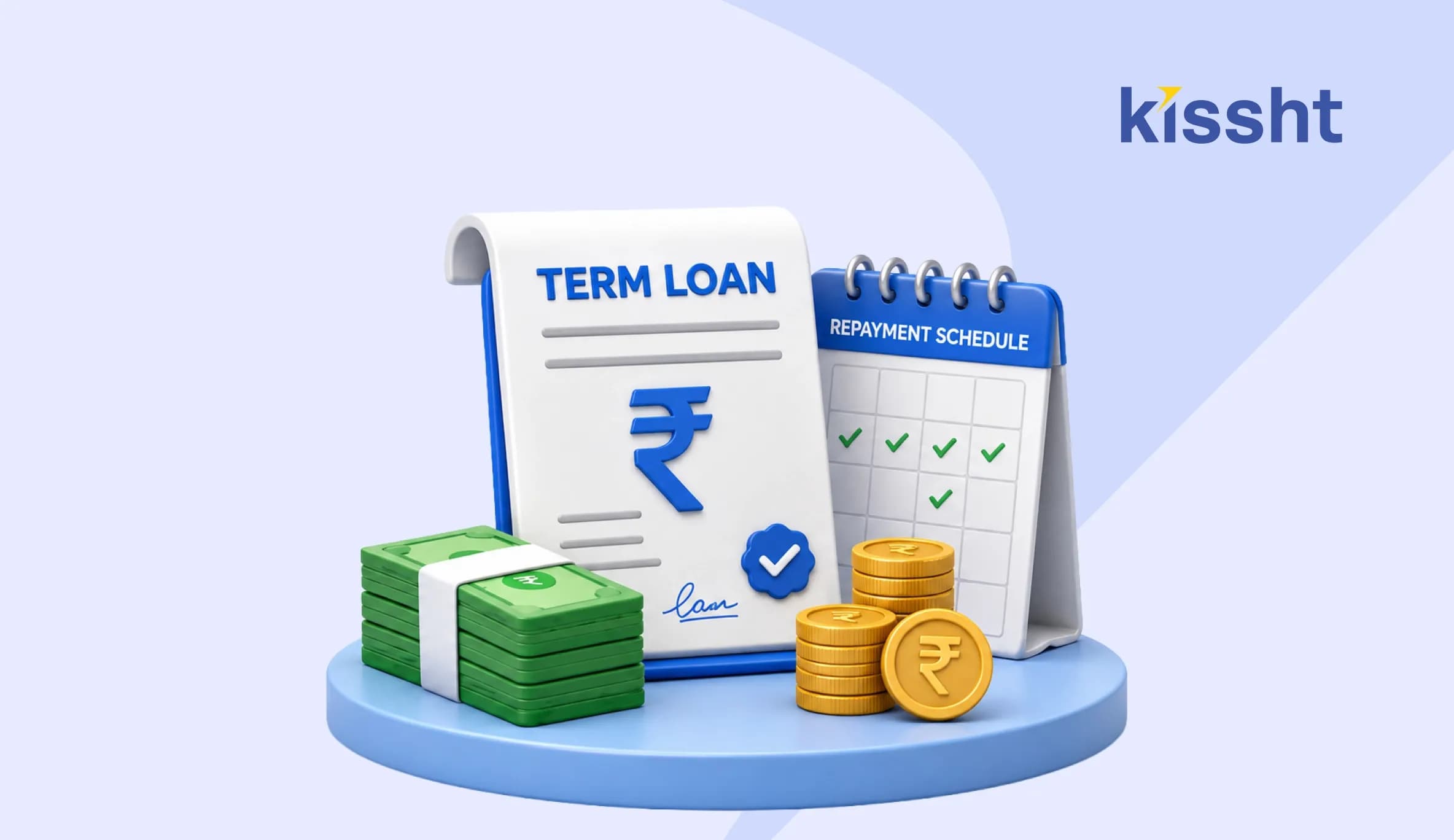
Businesses often require additional funds to purchase machinery, grow their operations, handle working capital, or invest in growth opportunities. One of the most commonly used borrowing options for such requirements is a term loan.
Understanding what a term loan is can assist businesses in making educated financial choices and selecting the right funding setup based on their repayment ability and objectives.
What Is a Term Loan?
A term loan is a type of financing provided by banks or financial institutions for a fixed amount and a fixed repayment period. The borrower repays the amount in regular installments over an agreed tenure along with applicable interest.
The meaning of the term loan is simple: it’s a structured loan borrowed for a specific purpose and repaid over a defined period.
Businesses usually take term loans for:
- Business expansion
- Machinery purchase
- Office setup
- Inventory management
- Technology upgrades
- Working capital requirements
The repayment schedule is generally monthly or quarterly.
Types of Term Loans
Term loans are broadly classified based on repayment tenure.
1. Short-Term Loans
Short-term loans usually have a repayment period of up to 12–36 months. These loans are commonly used for immediate operational needs or temporary cash flow gaps.
Businesses may apply for short-term loan options to manage:
- Seasonal demand
- Inventory purchases
- Emergency expenses
- Vendor payments
2. Intermediate-Term Loans
Intermediate-term loans generally have a repayment tenure ranging between 3 and 5 years.
These are commonly used for:
- Business upgrades
- Equipment purchases
- Expansion projects
3. Long-Term Loans
Long-term loans may extend beyond 5 years and are generally used for large-scale investments such as:
- Factory setup
- Commercial property purchase
- Infrastructure expansion
Features of a Term Loan
Here are some important features of a term loan:
| Feature | Description |
|---|---|
| Fixed Loan Amount | Borrowers receive a pre-approved amount |
| Defined Repayment Period | Loan is repaid within a fixed tenure |
| Interest Charges | Interest is charged based on lender policies |
| EMI-Based Repayment | Payments are usually made through EMIs |
| Secured or Unsecured | Some loans may require collateral |
How Does a Term Loan Work?
The lender approves a loan amount after evaluating factors such as:
- Business income
- Credit history
- Financial statements
- Existing liabilities
Once approved, the borrower obtains the funds and begins repayment through EMIs.
Businesses often use a term loan EMI calculator before borrowing to estimate monthly repayment obligations and overall borrowing cost.
Term Loan Interest Rate
The term loan interest rate depends on several factors, including:
- Credit score
- Business turnover
- Repayment history
- Loan tenure
- Type of collateral
A lower risk profile generally improves the chances of securing better interest rates.
What are the Differences Between Term Loan and Working Capital Loan
| Feature | Description |
|---|---|
| Fixed Loan Amount | Borrowers receive a pre-approved amount |
| Defined Repayment Period | Loan is repaid within a fixed tenure |
| Interest Charges | Interest is charged based on lender policies |
| EMI-Based Repayment | Payments are usually made through EMIs |
| Secured or Unsecured | Some loans may require collateral |
Who Can Apply for a Term Loan?
Term loans are generally available to:
- Small businesses
- MSMEs
- Startups
- Proprietorship firms
- Partnership businesses
- Private limited companies
Eligibility requirements differ across lenders.
Advantages of a Term Loan
1. Predictable Repayment Structure
Fixed EMIs help businesses plan finances better.
2. Supports Business Growth
Businesses can invest in expansion without disturbing working capital significantly.
3. Flexible Tenure Options
Borrowers can choose suitable repayment periods.
4. Builds Credit Profile
Timely repayment may strengthen business creditworthiness.
Things to Consider Before Taking a Term Loan
Before borrowing, businesses should evaluate:
- Repayment ability
- Interest cost
- Processing fees
- Loan tenure
- Existing debt obligations
Comparing lenders carefully is important before selecting a business loan provider.
Business Financing and Digital Lending
Today, businesses increasingly prefer digital borrowing solutions because of faster processing and simplified documentation. Along with traditional financing, many entrepreneurs also explore unsecured funding options for immediate financial needs.
Platforms like Kissht provide digital borrowing solutions designed for different financial requirements. Depending on eligibility, businesses may compare offerings such as business loan options or review the applicable business loan interest rate before applying.
However, borrowing decisions should always be aligned with repayment capacity and long-term financial planning.
Final Thoughts
A term loan is one of the most widely used financing options for businesses seeking structured funding. Whether the requirement is short-term operational support or long-term expansion, understanding loan types, repayment obligations, and interest costs can help businesses borrow more responsibly.
Choosing the right lender and repayment structure plays a major role in maintaining healthy business finances.
FAQs
1. What is a term loan used for?
A term loan is commonly used for business expansion, equipment purchase, infrastructure development, and working capital support.
2. What is the difference between short-term and intermediate-term loans?
Short-term loans usually have repayment periods below 3 years, while intermediate-term loans generally range between 3 and 5 years.
3. How is the term loan interest rate decided?
The term loan interest rate depends on factors such as business income, credit score, repayment history, and loan tenure.
4. Can startups apply for a business loan?
Yes, eligible startups and MSMEs can apply for financing through banks, NBFCs, or digital business loan providers, subject to lender policies.
5. Why should businesses use a term loan EMI calculator?
A term loan EMI calculator helps estimate monthly instalments, total repayment amount, and borrowing affordability before taking a loan.

What is a Payday Loan: Meaning, Benefits, and Features
 Previous
Vidya Lakshmi Portal: Complete Guide to Education Loans, Registration & Login (2026)


Kissht Research TeamTeam Kissht - Authors
Thank You for reading the Kissht blog. Behind every article is the Kissht Content & Research Team, working to make sure you always find clear, reliable answers to your personal finance questions.Thank you for reading the Kissht blog. Behind every article is the Kissht Content & Research Team, working to make sure you always find clear, reliable answers to your personal finance questions.

Instant Loans at Your Fingertips
Apply nowPersonal Loan
Fast, hassle-free loan for your personal needs.

Business Loan
Fuel your business growth with quick approvals.

Loan Against Property
Unlock your property’s value with ease.

Credit Pulse
Boost your credit score with smart insights.

Track your credit score
Simply enter your mobile number to get a quick overview of your credit score.
Check Now
Related articles
Jun 15, 2026
Same-Day Loans Explained: Meaning, Process, and Benefits
May 26, 2026
Unsecured Business Loan: All You Need to Know
Apr 08, 2026
What Is a Bridge Loan? Meaning, Uses, and How It Works.
April 1, 2026
How to Refinance Student Loans?

Mar 25, 2026
How to Choose the Right Loan Provider: Key Things to Check
Mar 25, 2026
How to Get an Online Loan Without Visiting a Bank
Mar 17, 2026
How Digital Lending Is Changing the Way Small Businesses Get Loans in India

Feb 24, 2026
Loan for Hair Transplant: Everything You Need to Know

Dec 30, 2025
Benefits of Choosing an Online Loan App in India
Dec 30, 2025
From Dreams to Reality: Funding Your Goals with a Personal Loan
Dec 26, 2025
Understanding Your Loan Agreement: Key Terms Explained
Dec 22, 2025

