Claim Settlement Ratio Explained: Why It Matters Before Buying Health Insurance
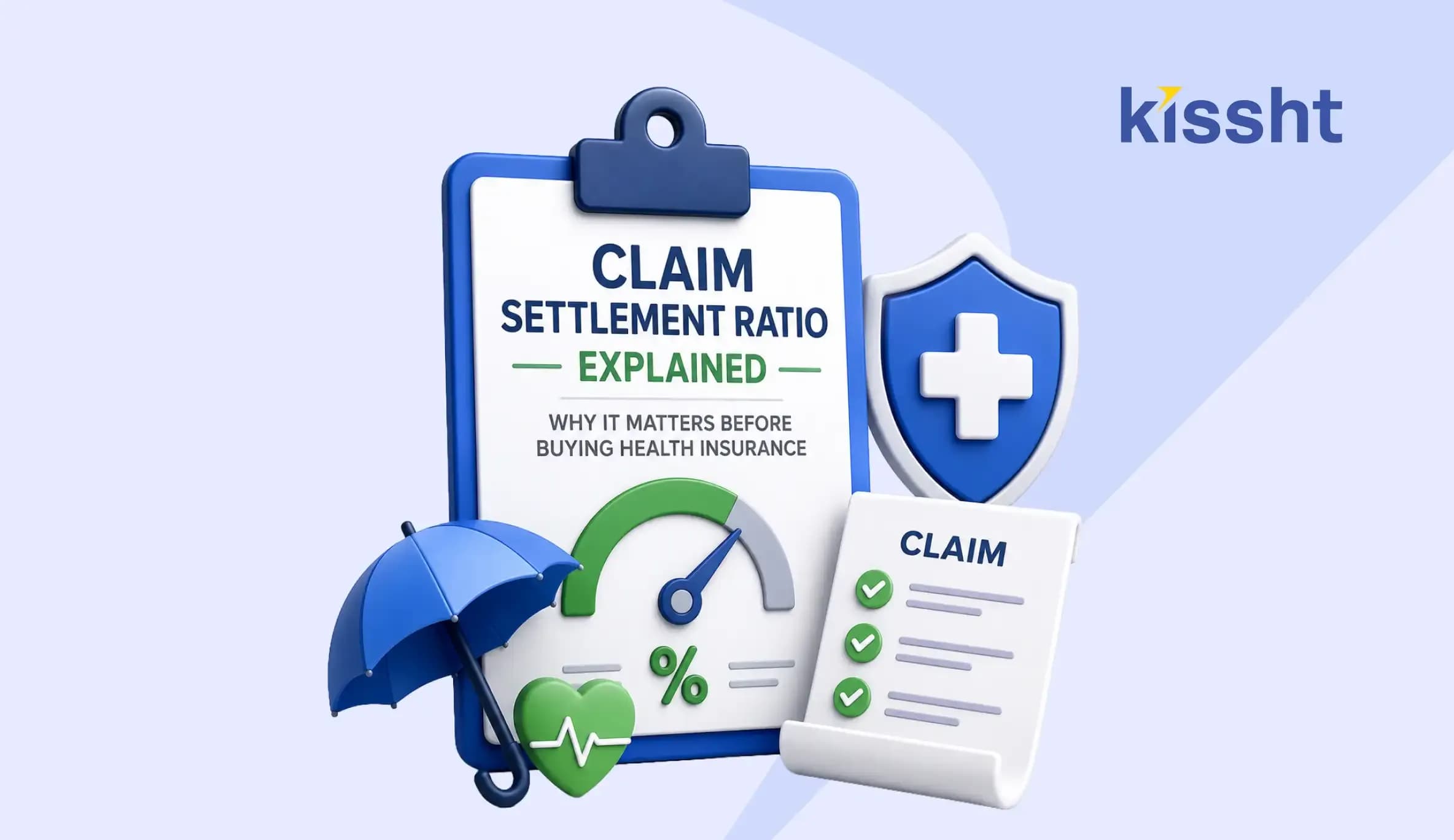
Nobody thinks about the Claim Settlement Ratio while signing up for a health insurance policy. Most people think about it only after a claim gets rejected, when the hospital bill is due, and the insurer suddenly finds a reason to delay or deny payment. That gap between “I have insurance” and “my insurance actually paid” is where families get blindsided and often face unexpected emotional and financial stress.
The health insurance claim settlement ratio gives you a clearer picture of an insurer's claim settlement record before you buy health insurance. While it cannot guarantee that your future claim will be approved, it can help you evaluate insurers more objectively instead of relying only on premiums, policy features, or marketing claims. In this blog, we shall understand its meaning and importance, and bust some common myths about this underrated ratio.
What is the claim settlement ratio in health insurance?
Claim Settlement Ratio (CSR) is the percentage of total medical claims an insurance company successfully settles out of the total claims it receives in a financial year.
In simple terms, the medical insurance claim settlement ratio indicates the likelihood that an insurance company honours genuine claims. Although it is an important indicator, it should always be evaluated alongside factors such as policy coverage, exclusions, waiting periods, network hospitals, and customer service.
Formula
Claim Settlement Ratio = (Number of Claims Settled ÷ Total Number of Claims Received) x 100
Example
Suppose an insurance company receives 10,000 health insurance claims during a financial year.
Total claims received = 10,000
Total claims settled = 9,700
Claim Settlement Ratio = (9,700 ÷ 10,000) x 100 = 97%
This means the insurer has settled 97 out of every 100 claims it received during that financial year.
Common myths about claim settlement ratio
Here are some of the most common myths about the CSR metric and the facts behind them:
| Myths | Facts |
|---|---|
| A high claim settlement ratio means every claim gets approved. | A high claim settlement ratio (generally 90% or above) indicates that the insurer has settled a large proportion of the claims it received. It is a positive sign, but it does not guarantee that every future claim will be approved. Every claim is assessed based on the policy's terms, conditions, and other eligibility factors. |
| Claim Settlement Ratio is the same as the Amount Settlement Ratio. | They are different. The Claim Settlement Ratio (CSR) measures the percentage of claims settled by number, while the Amount Settlement Ratio (ASR) measures the percentage of the total claim value paid by the insurer. |
| Low premiums mean poor claim settlement. | Premiums depend on factors such as age, health, coverage, and risk profile. A competitively priced policy can still come from an insurer with an excellent claim settlement record. |
| If I disclose everything, my claim will definitely be paid. | Full disclosure significantly improves the chances of a successful claim, but the claim must also meet the policy terms, waiting periods, exclusions, and documentation requirements. |
| Older insurance companies always have better claim settlement. | While established insurers may have extensive experience, many newer insurers also maintain strong claim settlement records and efficient digital claim processes. |
| A rejected claim means the insurer is unfair. | Claims may be rejected for valid reasons such as non-disclosure, policy exclusions, fraud, policy lapse, or claims made during waiting periods. |
| Claim Settlement Ratio for health insurance never changes. | CSR is updated periodically based on the insurer's performance, so it is important to check the latest available figures before purchasing a policy. |
| A low claim settlement ratio always indicates poor service. | A low claim settlement ratio (generally 85% or less) indicates that the insurer has settled a smaller percentage of the claims it received. It does not always mean poor service. Consider the insurer's long-term claims record, policy benefits, customer support, and hospital network before making a decision. |
Why does the claim settlement ratio matter before buying health insurance?
Based on the myths and facts discussed above, the claim ratio for health insurance is neither a guarantee of claim approval nor a number you should ignore. It is a historical performance indicator that shows how consistently an insurer has settled claims over a financial year. Although it cannot predict the outcome of your individual claim, it can help you evaluate an insurer’s claims records and compare insurers on a common benchmark.
The health insurance claim settlement ratio delivers the best value when assessed alongside other policy and insurer-related factors. A high ratio may indicate a favourable claims record. Still, it does not reveal the scope of coverage, waiting periods, exclusions, claim settlement amount ratio, network hospitals, or the quality of customer support. Each of these factors influences your overall claims experience and determines whether a policy meets your healthcare and financial needs.
Conclusion
When you buy health insurance, do not focus only on finding the highest claim settlement ratio or the best claim settlement ratio. Instead, compare insurers based on overall policy benefits, coverage, affordability, customer support, and other factors. In short, choosing the best claim settlement ratio health insurance provider should be part of a broader evaluation rather than the only deciding factor.
Even with health insurance, out-of-pocket medical expenses can arise. If you need quick access to funds, Kissht provides a user-friendly loan app that enables borrowers to get aninstant loan online through a seamless digital process.
FAQs
-
What is the claim settlement ratio?
Claim Settlement Ratio (CSR) is the percentage of total medical claims an insurance company successfully settles out of the total claims it receives in a financial year.
-
What is the best claim settlement ratio in health insurance?
The best claim settlement ratio in health insurance is generally 95% or above. Many buyers also compare insurers with the highest claim settlement ratio before purchasing a policy.
-
What is the formula for claim settlement ratio?
Claim Settlement Ratio = (Number of Claims Settled ÷ Total Number of Claims Received) x 100
-
Should I choose health insurance only based on the claim settlement ratio?
No. Even if an insurer offers the best claim settlement ratio health insurance, you should also compare policy benefits, coverage limits, waiting periods, exclusions, cashless hospital network, premium, and customer reviews.
-
Does CSR include both cashless and reimbursement claims?
Yes, the medical insurance claim settlement ratio includes both cashless and reimbursement claims. This gives policyholders an overall overview of an insurer’s claim settlement performance.
What Is the Grace Period in Health Insurance? Meaning, Rules & Benefits
 Previous
What Is the Difference? MSME Loan vs Business Loan


Kissht Research TeamTeam Kissht - Authors
Thank You for reading the Kissht blog. Behind every article is the Kissht Content & Research Team, working to make sure you always find clear, reliable answers to your personal finance questions.Thank you for reading the Kissht blog. Behind every article is the Kissht Content & Research Team, working to make sure you always find clear, reliable answers to your personal finance questions.

Instant Loans at Your Fingertips
Apply nowPersonal Loan
Fast, hassle-free loan for your personal needs.

Business Loan
Fuel your business growth with quick approvals.

Loan Against Property
Unlock your property’s value with ease.

Credit Pulse
Boost your credit score with smart insights.

Track your credit score
Simply enter your mobile number to get a quick overview of your credit score.
Check Now

Related articles

Aug 27, 2026
What is the Use of ABHA Card in India?
Jun 30, 2026
What Is Covered and Not Covered Under Health Insurance?
30 June 2026
Health Insurance Policy Renewal: Everything You Need to Know
Jun 30, 2026
What Is the Grace Period in Health Insurance? Meaning, Rules & Benefits

Jun 6, 2026
Best Health Insurance for Senior Citizens in India 2026
Mar 25, 2026
GST on Health Insurance in India: Everything You Need to Know

Mar 17, 2026
Health Insurance for Women: Key Features You Should Check Before Buying

Mar 16, 2026
Private Health Insurance vs Government Schemes: Key Differences Explained
Mar 02 ,2026
Personal Accident Cover Explained: What Riders in India Often Overlook
Mar 01, 2026
How to File a Reimbursement Claim for Health Insurance?
March 2, 2026
Health Insurance Tax Benefits for Salaried Employees
Jan 21, 2026

