How to File Income Tax IT Return Online: Meaning, Step-by-Step Process
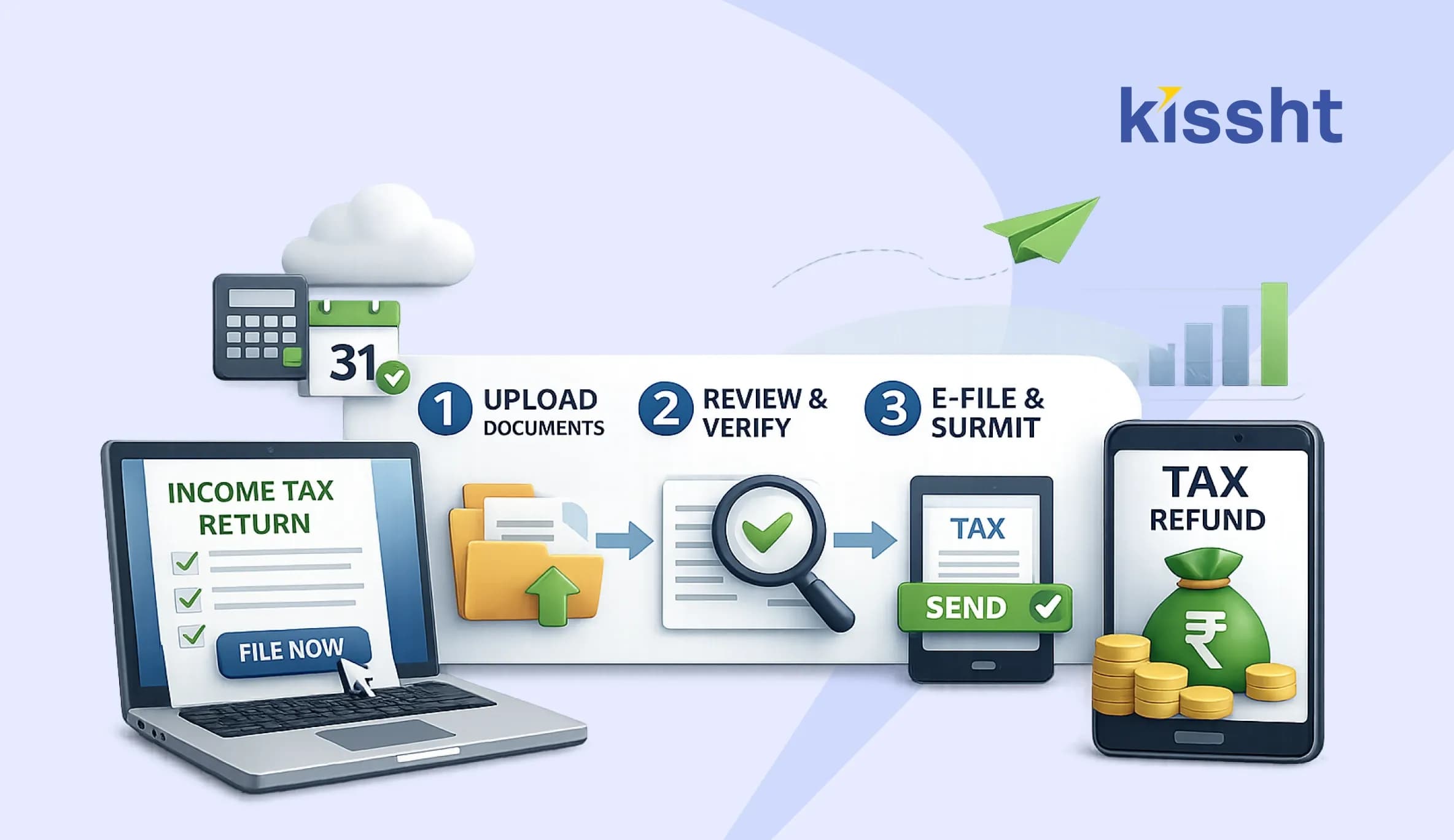
Filing an Income Tax Return is an essential annual responsibility for many individuals and businesses in India. It helps the government assess income, calculate tax liability, and maintain financial transparency. Over the years, the process has become simpler with the introduction of online filing through the official Income Tax portal.
Before understanding the steps, it is important to know who needs to file an ITR and what filing an IT return actually means.
Who Needs to File an Income Tax Return in India
You are required to file an income tax return if you fall under any of the following categories:
-
Individuals whose total income exceeds the basic exemption limit
-
Salaried employees, self-employed professionals, and freelancers
-
Business owners and partners in firms
-
Individuals who want to claim a tax refund
-
People who have earned income from investments, property, or foreign assets
-
Anyone who wishes to carry forward losses for future years
Even if no tax is payable, filing returns helps build a financial record and is often required for loans, visas, and other official purposes.
What Is an IT Return?
An income tax(IT) return is a form submitted to the Income Tax Department that details your income, deductions, taxes paid, and refunds claimed during a financial year. This information helps the department verify whether you have paid the correct amount of tax.
Once submitted through the Income Tax e-filing website, the return becomes part of your official financial history.
Documents Required Before Filing IT Return Online
Before starting the filing process, keep these documents ready:
-
PAN card
-
Aadhaar card
-
Form 16 or income proof
-
Bank account details
-
Investment and deduction proofs
-
Interest certificates, if applicable
Having these documents simplifies tax computation and reduces errors during filing.
How to File Income Tax Return Online Step by Step
Here is a simple guide to help you file income tax returns online in India without confusion.
Step 1: Visit the Official E-Filing Portal
Go to the official Income Tax e-filing website (https://www.incometax.gov.in/iec/foportal/) and sign in using your PAN, password, and captcha. This acts as your IT return login.
Step 2: Select the Relevant Assessment Year
Choose the correct assessment year for which you want to file the return and select the option to file online.
Step 3: Choose the Appropriate ITR Form
Based on your income source, select the correct ITR form. Salaried individuals and professionals usually file ITR 1 or ITR 4.
If you select ITR 1, you’ll have to enter personal information, gross income, total deductions, tax paid (such as TDS, TCS, etc.), and total tax liability.
If you select ITR 4, you’ll have to enter personal information, gross income, disclosures, total deductions, tax paid, and total tax liability.
Step 4: Claim Deductions and Compute Tax
Add eligible deductions under various sections and complete the tax computation. The system calculates the payable tax or refund automatically.
Step 5: Verify and Submit the Return
Review all details and submit the return. Choose Aadhaar OTP, net banking, or other verification methods to complete the process.
Once verified, your IT return filing is considered complete.
How to Submit IT Returns Online Successfully
After submission, ensure your return is verified within the prescribed time. An unverified return is treated as invalid. You can verify it online through OTP or bank login options.
You can also track the status of your return anytime through the portal.
Why Filing IT Returns Matters Beyond Taxes
Filing returns is not only about tax compliance. It also helps in:
-
Applying for visas
-
Availing financial services
-
Building creditworthiness
-
Accessing formal financial products
Many lenders check income tax records before approving credit. When planning finances or managing emergencies, people often explore options like a personal loan online or use a quick loan app. Platforms such as Kissht rely on verified income and tax records to assess eligibility smoothly, making timely return filing even more important.
Common Mistakes to Avoid While Filing Returns
-
Selecting the wrong ITR form
-
Missing income sources
-
Incorrect bank details
-
Not verifying the return after submission
-
Filing after the due date without a valid reason
Avoiding these mistakes ensures faster processing and fewer notices.
Final Thoughts
Understanding how to file ITR online is no longer complicated. With a structured process, proper documentation, and the official e-filing system, anyone can complete the task efficiently. Filing returns on time helps maintain financial discipline, ensures compliance, and supports future financial planning.
Whether it is for tax refunds, loan eligibility, or record keeping, filing your income tax return online is a step that benefits you in more ways than one.
FAQs
Q1. What is an IT return?
An IT return, also known as an income tax return, is a document filed with the Income Tax Department that reports your income, deductions, taxes paid, and refund claims for a financial year.
Q2. How do I file an income tax return online in India?
You can file your income tax return online by logging in to the official Income Tax e-filing website using your PAN, selecting the correct assessment year, filling in income details, and submitting the return after verification.
Q3. Who should file an income tax return?
Individuals earning above the basic exemption limit, business owners, freelancers, professionals, and anyone claiming a tax refund or carrying forward losses should file an income tax return.
Q4. Can I file an IT return without Form 16?
Yes, you can file your return without Form 16 if you have other income proofs such as salary slips, bank statements, and interest certificates.
Q5. What happens if I file my income tax return late?
Late filing may attract penalties, interest on tax dues, and loss of certain benefits like carrying forward losses.
Q6. Why is the IT return filing important for loans?
Income tax returns act as income proof and financial credibility. Lenders often check ITR records while approving credit, especially when applying through digital platforms or a quick loan app.




Instant Loans at Your Fingertips
Apply nowPersonal Loan
Fast, hassle-free loan for your personal needs.

Business Loan
Fuel your business growth with quick approvals.

Loan Against Property
Unlock your property’s value with ease.

Credit Pulse
Boost your credit score with smart insights.

Track your credit score
Simply enter your mobile number to get a quick overview of your credit score.
Check Now
Related articles

Aug 20, 2026
Chakshu Portal: What to Do When You Receive a Fraudulent Communication?

Jul 15, 2026
How Much Loan Can You Get for a Food Franchise Business?

Aug 10, 2026
Independence Day Special: 10 Smart Money Habits to Build Financial Freedom
Jul 23, 2026
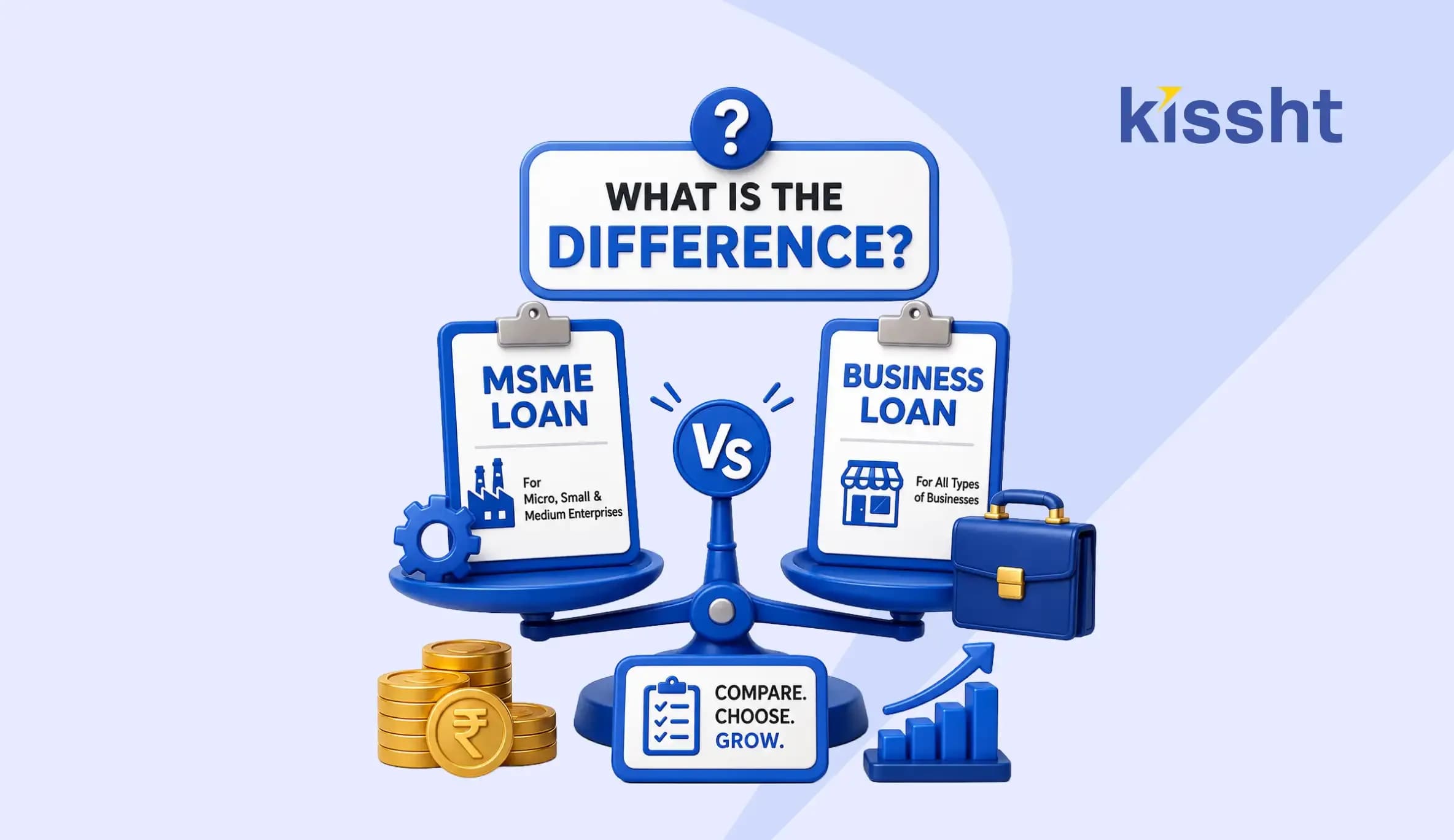
What Is the Difference? MSME Loan vs Business Loan
Jul 20, 2026
How to Check EPFO Pension Status Online Using PPO Number (2026)
Jul 21, 2026
Top Reasons for MSME Loan Rejection
Jul 20, 2026
Documents Required for GST Registration

Jul 13, 2026
Personal Loan vs MSME Loan: Which is Better for Business Needs?
Jun 29, 2026
How Much Personal Loan Can I Get Based on My Salary? Complete Eligibility Guide (2026)

Jun 20, 2026
Top Government Schemes for Starting a Business in India 2026: A Complete Guide
Jun 25, 2026
Manage Your Monthly Budget with Ease Using Smart Household Finance Apps

Jun 20, 2026
How to Download Udyam Certificate Online in 2026

Kissht Research TeamTeam Kissht - Authors
Thank You for reading the Kissht blog. Behind every article is the Kissht Content & Research Team, working to make sure you always find clear, reliable answers to your personal finance questions.Thank you for reading the Kissht blog. Behind every article is the Kissht Content & Research Team, working to make sure you always find clear, reliable answers to your personal finance questions.

