What Is a Debt Trap? How Young Professionals Fall into Debt
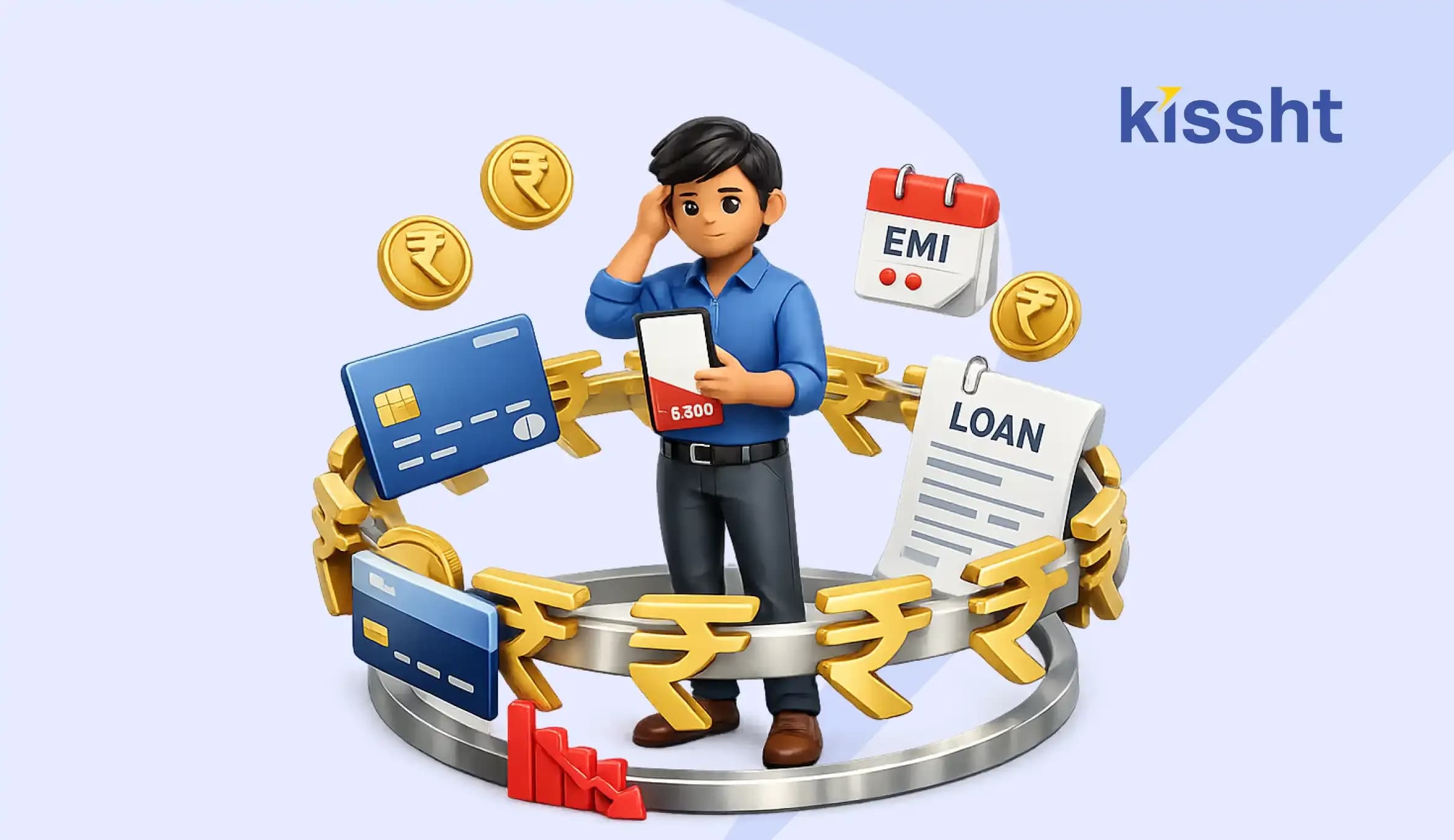
What Is a Debt Trap? How Young Professionals Fall into Debt
Managing money effectively is a key part of building financial stability, especially for young professionals at the start of their careers. With rising expenses, easy access to credit, and evolving lifestyle choices, it is important to understand how debt can impact long-term financial health.
The concept of what a debt trap is becomes relevant when borrowing starts to feel overwhelming. With easy access to credit through an instant loan app or options for an instant loan online, managing repayments becomes crucial. Using tools like a loan EMI calculator and choosing structured solutions such as a loan from Kissht can help individuals stay in control of their finances.
What Is a Debt Trap
A debt trap is a situation in which an individual takes on multiple loans or debts and struggles to repay them due to rising financial obligations.
In simple terms, a debt trap occurs when:
- Existing loans are difficult to repay
- New loans are taken to manage previous ones
- Interest keeps accumulating
- Financial stress continues to increase
How People Fall into Debt
Understanding how people fall into debt can help prevent it.
-
Easy Access to Credit
With digital platforms offering quick loans, borrowing has become more convenient. While this improves accessibility, it also requires careful financial planning.
-
Lifestyle Inflation
As income increases, spending habits often change. Unplanned expenses can lead to borrowing beyond one’s capacity.
-
Lack of Financial Planning
Not budgeting or tracking expenses can result in overspending and reliance on credit.
-
Multiple Borrowings
Taking several loans at once can lead to loan debt problems in India, especially if repayment schedules overlap.
Common Causes of a Debt Trap
Several factors contribute to a debt trap.
-
High Interest Obligations
Borrowing at high interest rates can lead to high-interest debt problems, making repayment more difficult over time.
-
Credit Card Usage
Misusing credit cards can result in credit card debt trap, especially when only minimum payments are made.
-
Irregular Income or Job Changes
Sudden changes in income can affect repayment ability.
Financial Mistakes by Young Professionals
Many financial mistakes young professionals make include:
- Not saving for emergencies
- Overestimating repayment capacity
- Ignoring interest costs
Signs of a Debt Trap
Recognising early warning signs can help avoid serious financial issues.
Common Signs of a Debt Trap
- Difficulty paying EMIs on time
- Taking new loans to repay existing ones
- Increasing dependence on credit
- Constant financial stress
Identifying these signs of a debt trap early can help you take corrective action.
Debt Trap Examples
Understanding real-life debt trap examples makes the concept clearer.
For instance, a young professional may take a personal loan for travel, use a credit card for expenses, and then take another loan to manage repayments. Over time, overlapping EMIs and interest charges create financial pressure.
This illustrates how a debt trap can develop gradually.
Role of Digital Lending in Borrowing
Digital lending platforms have made credit more accessible and convenient.
Borrowers can now:
- Apply through an instant loan app
- Access funds using instant loan online platforms
- Compare options before borrowing
While these tools provide flexibility, responsible borrowing remains essential.
Platforms offering structured repayment options, such as a loan from Kissht, can help borrowers manage finances more effectively when used wisely.
How to Avoid a Debt Trap
Understanding how to avoid a debt trap is essential for financial stability.
-
Plan Before Borrowing
Always evaluate your repayment capacity before taking a loan.
-
Use a Loan EMI Calculator
A loan EMI calculator helps you understand monthly obligations and plan your budget accordingly.
-
Limit Multiple Loans
Avoid taking several loans at the same time.
-
Build an Emergency Fund
Having savings reduces the need for borrowing during unexpected situations.
-
Track Expenses Regularly
Monitoring your spending helps prevent unnecessary borrowing.
Comparison Table: Healthy Debt vs Debt Trap
| Aspect | Healthy Debt | Debt Trap |
|---|---|---|
| Repayment | Planned and manageable | Difficult to manage |
| Number of Loans | Limited and controlled | Multiple overlapping loans |
| Financial Stress | Minimal | High |
| Borrowing Purpose | Planned expenses | Frequent or unplanned borrowing |
| Control | High control over finances | Reduced financial control |
This comparison highlights the difference between responsible borrowing and a debt trap in India.
Practical Tips for Young Professionals
- Start financial planning early
- Avoid impulsive borrowing
- Understand loan terms clearly
- Choose the best loan provider
- Prioritise savings along with spending
These habits help build long-term financial stability.
Final Thoughts
A debt trap can develop gradually if borrowing decisions aren't aligned with financial capacity. For young professionals, understanding the risks, recognising warning signs, and adopting disciplined financial habits are essential steps toward maintaining financial health. With the right approach, it is possible to use credit responsibly while avoiding unnecessary financial stress.
FAQs
Q1. What is a debt trap?
A debt trap is a situation when an individual struggles to repay loans due to increasing financial obligations and interest.
Q2. How do people fall into a debt trap?
People fall into a debt trap because of overspending, multiple loans, high interest rates, and a lack of financial planning.
Q3. What are the signs of a debt trap?
Common signs include difficulty paying EMIs, taking new loans for repayment, and increasing financial stress.
Q4. How can I avoid a debt trap?
You can avoid a debt trap by planning finances, using a loan EMI calculator, limiting borrowings, and maintaining an emergency fund.





Instant Loans at Your Fingertips
Apply nowPersonal Loan
Fast, hassle-free loan for your personal needs.

Business Loan
Fuel your business growth with quick approvals.

Loan Against Property
Unlock your property’s value with ease.

Credit Pulse
Boost your credit score with smart insights.

Track your credit score
Simply enter your mobile number to get a quick overview of your credit score.
Check Now
Related articles

Aug 20, 2026
Chakshu Portal: What to Do When You Receive a Fraudulent Communication?
Jul 15, 2026
How Much Loan Can You Get for a Food Franchise Business?
Aug 10, 2026
Independence Day Special: 10 Smart Money Habits to Build Financial Freedom
Jul 23, 2026
What Is the Difference? MSME Loan vs Business Loan
Jul 20, 2026
How to Check EPFO Pension Status Online Using PPO Number (2026)
Jul 21, 2026
Top Reasons for MSME Loan Rejection
Jul 20, 2026
Documents Required for GST Registration
Jul 13, 2026
Personal Loan vs MSME Loan: Which is Better for Business Needs?
Jun 29, 2026
How Much Personal Loan Can I Get Based on My Salary? Complete Eligibility Guide (2026)

Jun 20, 2026
Top Government Schemes for Starting a Business in India 2026: A Complete Guide
Jun 25, 2026
Manage Your Monthly Budget with Ease Using Smart Household Finance Apps

Jun 20, 2026
How to Download Udyam Certificate Online in 2026

Kissht Research TeamTeam Kissht - Authors
Thank You for reading the Kissht blog. Behind every article is the Kissht Content & Research Team, working to make sure you always find clear, reliable answers to your personal finance questions.Thank you for reading the Kissht blog. Behind every article is the Kissht Content & Research Team, working to make sure you always find clear, reliable answers to your personal finance questions.

