Tax Benefits on Health Insurance Under Section 80D
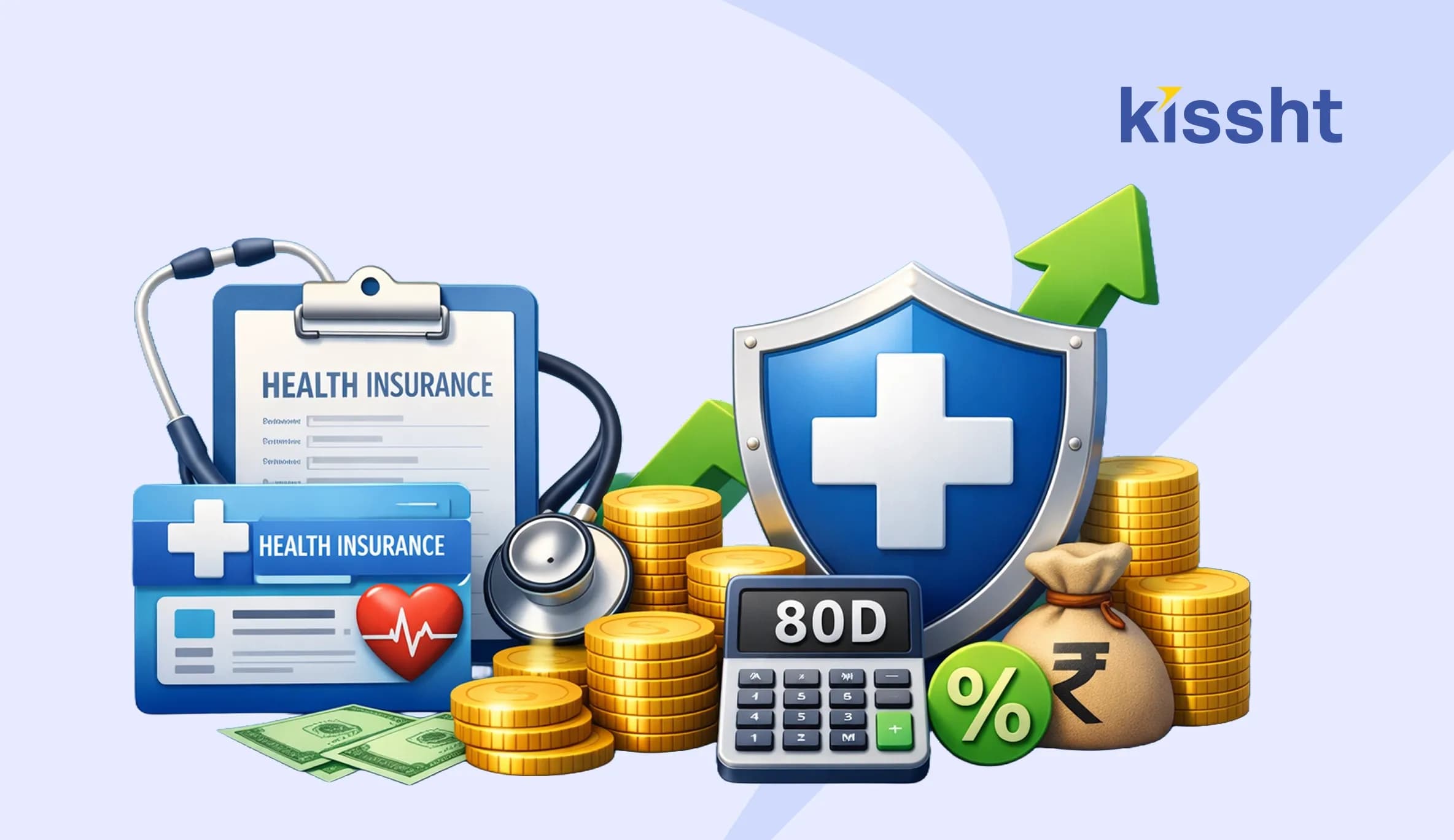
Tax Benefits on Health Insurance Under Section 80D Explained
Rising medical costs and evolving tax responsibilities have made financial planning more important for both salaried and self-employed individuals. Many taxpayers actively seek smart, legal ways to reduce tax while ensuring reliable financial protection.
This blog explains tax benefits on health insurance under Section 80D, covering eligibility, limits, deductions, and practical examples to help you plan better and save tax confidently.
What Is Section 80D and Why It Matters
Section 80D of the Income Tax Act allows deductions on premiums paid towards health insurance. It is designed to encourage people to secure health cover while enjoying a tax benefit in health insurance planning. Unlike Section 80C, this deduction is available over and above standard tax-saving investments, making it a powerful tool for health insurance for tax savings.
The 80 D medical insurance provision applies to individuals and Hindu Undivided Families (HUF) and covers premiums paid for self, family members, and parents. This makes the 80D health insurance tax break especially relevant for those supporting elderly parents.
Who Can Claim 80D Tax Benefit
The 80D tax benefit is available to the following taxpayers:
- Individuals: Can claim deductions for self, spouse, dependent children, and parents
- HUFs: Can claim deductions for premiums paid for any HUF member
Both groups can use medical insurance deduction benefits as long as payments are made through eligible modes. This ensures access to health insurance tax benefits for a wide range of taxpayers.
Deduction Limits Under Section 80D
The tax benefit in health insurance depends on the age of the insured persons. Senior citizens get higher limits because of increased healthcare needs. The table below explains the deduction clearly.
| Scenario | Coverage For | Maximum Deduction |
|---|---|---|
| Case 1 | Self/Family below 60 + Parents below 60 | ₹25,000 + ₹25,000 = ₹50,000 |
| Case 2 | Self/Family below 60 + Parents 60 and above | ₹25,000 + ₹50,000 = ₹75,000 |
| Case 3 | Self/Family 60 and above + Parents 60 and above | ₹50,000 + ₹50,000 = ₹1,00,000 |
| HUF | Members below 60 | ₹25,000 |
| HUF | Members 60 and above | ₹50,000 |
These limits apply to 80D exemption claims and include premiums paid under the medical insurance premium 80D rules.
Preventive Health Check-Up Benefits
One lesser-known health cover tax benefits feature is the preventive health check-up deduction.
- Up to ₹5,000 per financial year is allowed
- This amount is included within the overall 80D health insurance limit
- Payments for check-ups can be made in cash
Keep in mind that you cannot claim further for check-ups if the medical insurance premium’s 80D limit is fully used. This rule directly impacts how medical insurance premiums tax deductible claims are calculated.
What Expenses Are Covered Under Section 80D
The tax health insurance deduction applies to the following expenses:
- Premiums paid on health insurance policies for yourself, your spouse and children, or your parents
- Contributions to the Central Government Health Scheme
- Medical expenditure for senior citizens aged 60 and above who do not have insurance
These inclusions make mediclaim tax benefit claims more flexible.
Important Rules and Exclusions to Remember
To avoid rejection of your medical insurance tax benefit claim, keep these rules in mind:
- Premiums paid in cash are not eligible
- Payments must be made via cheque, net banking, debit card, credit card, or UPI
- Preventive health check-up cash payments are allowed
- You cannot exceed the specified limits under 80 d medical insurance
Understanding these rules ensures your mediclaim deduction is valid and compliant.
How Section 80D Helps You Save More Tax
The biggest advantage of the health insurance tax benefit 80D is that it offers dual benefits:
- Financial protection against medical emergencies
- Reduction in taxable income
It also helps taxpayers go beyond Section 80C limits, making it a smart addition to any tax-saving strategy.
Practical Example of Section 80D Tax Saving
Suppose you are 35 years old and pay ₹22,000 for your family’s policy and ₹48,000 for your parents, who are senior citizens. Under medical insurance deduction rules:
- ₹22,000 is deductible for self and family
- ₹48,000 is deductible for parents
Your total tax benefit in health insurance becomes ₹70,000, reducing your taxable income significantly while ensuring full family coverage.
Common Mistakes to Avoid
Many taxpayers miss out on tax benefits on health insurance due to simple errors:
- Paying premiums in cash
- Assuming preventive check-ups are extra
- Forgetting to claimthe medical insurance deduction for parents
Avoiding these mistakes helps you fully utilise health insurance for tax-saving opportunities.
Why Section 80D Should Be Part of Your Financial Plan
Healthcare inflation is rising faster than general inflation. Using tax health insurance benefits not only secures your health needs but also improves your overall financial stability. Whether it is mediclaim tax benefit or coverage for senior parents, Section 80D plays a vital role in long-term planning.
Conclusion
Section 80D offers meaningful health cover tax benefits while helping reduce your tax burden legally. By understanding limits, eligible expenses, and payment rules, you can make informed decisions and avoid costly mistakes. If medical expenses ever strain your budget, Kissht’s instant personal loans can help you manage emergencies smoothly while you stay financially prepared.
FAQs
1. Can I claim medical insurance premiums tax deductible benefits for my parents
Yes, premiums paid for parents are eligible under Section 80D, with higher limits for senior citizens.
1. Is a preventive health check-up covered under 80D exemption?
Yes, up to ₹5,000 is allowed within the overall limit.
1. Are cash payments allowed for mediclaim deduction?
Only preventive check-ups can be paid in cash. Premiums must be paid digitally.
1. Can HUFs claim health insurance tax benefits?
Yes, HUFs can claim deductions for members under Section 80D.
1. Is Section 80D separate from Section 80C?
Yes, the health insurance tax benefit 80d is available over and above Section 80C deductions.




Instant Loans at Your Fingertips
Apply nowPersonal Loan
Fast, hassle-free loan for your personal needs.

Business Loan
Fuel your business growth with quick approvals.

Loan Against Property
Unlock your property’s value with ease.

Credit Pulse
Boost your credit score with smart insights.

Track your credit score
Simply enter your mobile number to get a quick overview of your credit score.
Check Now
Related articles

Aug 27, 2026
What is the Use of ABHA Card in India?
Jun 30, 2026
What Is Covered and Not Covered Under Health Insurance?
30 June 2026
Health Insurance Policy Renewal: Everything You Need to Know
Jun 30, 2026
What Is the Grace Period in Health Insurance? Meaning, Rules & Benefits
31st Jul 2026
Claim Settlement Ratio Explained: Why It Matters Before Buying Health Insurance
Jun 6, 2026
Best Health Insurance for Senior Citizens in India 2026
Mar 25, 2026
GST on Health Insurance in India: Everything You Need to Know
Mar 17, 2026
Health Insurance for Women: Key Features You Should Check Before Buying
Mar 16, 2026
Private Health Insurance vs Government Schemes: Key Differences Explained
Mar 02 ,2026
Personal Accident Cover Explained: What Riders in India Often Overlook
Mar 01, 2026
How to File a Reimbursement Claim for Health Insurance?
March 2, 2026
Health Insurance Tax Benefits for Salaried Employees

Kissht Research TeamTeam Kissht - Authors
Thank You for reading the Kissht blog. Behind every article is the Kissht Content & Research Team, working to make sure you always find clear, reliable answers to your personal finance questions.Thank you for reading the Kissht blog. Behind every article is the Kissht Content & Research Team, working to make sure you always find clear, reliable answers to your personal finance questions.

